Most conversations about plantation shutters in the UK start with the product: louvre sizes, finishes, frame types. For a retailer or installer, the bigger commercial question often sits further back in the chain. Where the shutters are made decides how long your customer waits, how quickly a mistake gets put right and how much of each job's margin survives to the end.
This guide looks at what changes when you buy shutters made in the UK rather than importing them, and where the difference shows up in day-to-day trading. It is written for shutter businesses weighing up suppliers, not for homeowners, so the focus is on lead times, remakes, cash flow and the way you talk to customers about UK made shutters.
Why the supply chain matters more than the brochure
Two shutter samples can look almost identical on a showroom wall. The customer sees the finish, the louvre and the price. You see something else: what happens between taking a deposit and fitting the final panel, and how many things can go wrong in between.
With imported shutters, that gap usually includes sea freight, port handling and a domestic delivery leg. Each stage adds time and each one adds a point where an order can be delayed or damaged. When the factory is in the same country, the journey from production line to your van is usually a matter of days rather than weeks.
That difference rarely appears on a spec sheet, but it shapes the whole job. A shorter supply chain gives you more predictable fitting dates, fewer awkward calls to customers and less time chasing orders. If you are comparing suppliers, look at the product range, for example the Slim Line composite shutter range , alongside how and where it is built.
Lead times and your customer's patience
Shutters are a considered purchase. By the time a customer has booked a survey, chosen a style and paid a deposit, they are usually keen to see the finished result. Every extra week between survey and fitting is a week in which they can change their mind, start comparing prices again or simply lose enthusiasm.
The gap between survey and fitting
Long lead times create a quiet cost for installers. Deposits are tied up for longer, fitting diaries become harder to plan and some customers ask for updates every few days. A UK manufacturer can usually give a firmer delivery date, which makes it easier to book the fitting at the point of sale and keep it.
It also helps with the final balance. Most shutter businesses take the remaining payment on completion, so a shorter cycle means cash comes back into the business faster. Over a year, that can make a noticeable difference to how many jobs you can carry at once.
Peak season pressure
Demand for shutters tends to rise before Christmas and again in spring. Imported orders placed during those periods can be caught up in wider shipping delays that you have no control over. With domestic production, the main variable is the factory's own capacity, which a good supplier will tell you about in advance. It is worth asking how a supplier handles busy periods and how orders move through production; the order to delivery process at British Made Shutters is one example of what that looks like.
Remakes: where UK manufacturing earns its keep
Every shutter business deals with remakes. A measurement is taken from the wrong point, a handle sits deeper than expected or a panel arrives damaged. The question is how long it takes to put right.
When the product comes from overseas, a single remade panel can take almost as long as the original order. The customer is left with an incomplete window and you are left managing their frustration. With UK manufacturing, a remake can often be turned around much faster, and that speed protects your reputation more than any discount could.
Remakes also carry a legal dimension. Under the Consumer Rights Act 2015 , when a customer asks for faulty goods to be repaired or replaced, the trader has to do it within a reasonable time and without significant inconvenience. Your supply chain directly affects how easily you can meet that duty.
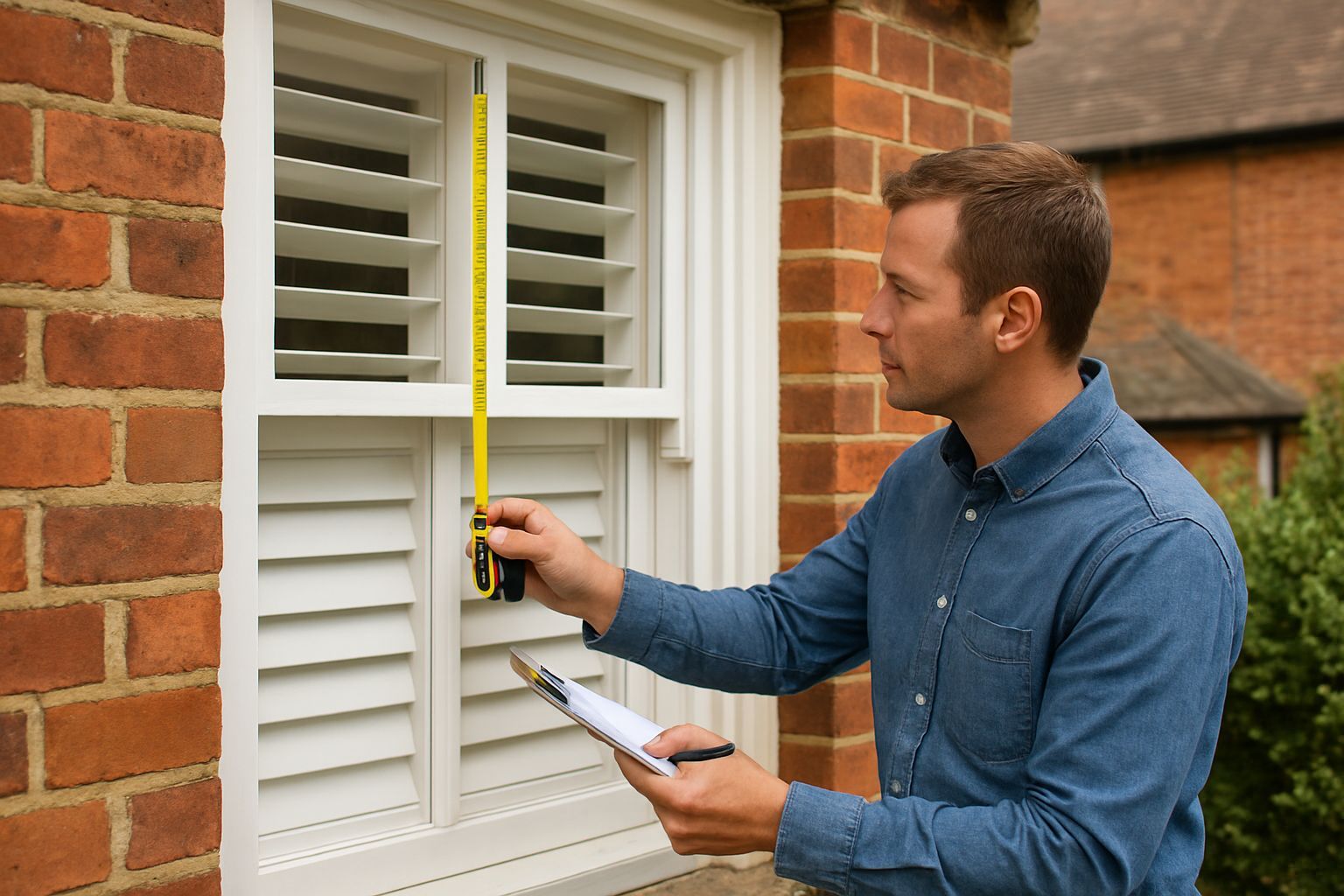
Different frame types, such as L-frames and Z-frames, also impact fitting and measurement: L-frames fit inside or outside the window recess and require precise rebate measurements, while Z-frames overlap the wall casing to hide small out-of-square gaps.
The most common causes of remakes are worth tracking so you can see where time is being lost:
- Measuring errors at survey, especially on out-of-square windows and deep reveals
- Handles, locks or sills that were not recorded and clash with the frame or louvres
- Incorrect style or colour entered on the order
- Transit damage, which becomes more likely the more times an order is handled
- Fitting issues that call for a different frame or extra build-out
Some of these are within your control and some are not. A supplier closer to home will not stop measuring mistakes, but it shortens the time it takes to recover from them. For practical fitting guidance, the article on how easy composite shutters are to install covers the basics your fitters will meet on site.
Talking about UK made shutters with customers
Many homeowners like the idea of buying British, but the phrase only helps you sell if you can explain what it means for them. Vague claims rarely land. Specific benefits do.
Be specific about the benefits
Instead of leading with "made in Britain", connect it to things the customer cares about: a clear fitting date, quicker resolution if anything needs adjusting and a supplier you can reach easily when you have a question. Those points are easy to understand and easy to believe.
If your supplier holds a recognised accreditation, mention it. British Made Shutters, for example, is a registered member of Made in Britain , the organisation that licenses the Made in Britain mark to UK manufacturers. Customers can check that kind of claim for themselves, which makes it more persuasive.
Avoid overclaiming
It is tempting to suggest that UK made plantation shutters are automatically better in every way. That is not a claim you need to make, and it can backfire if a customer has seen good imported products elsewhere. Keep the conversation on what you can stand behind: build quality you have seen, materials you can explain and lead times you can commit to. The Made in Britain page sets out the main points in a way that is easy to adapt for your own sales conversations.
What to ask a UK shutter manufacturer before you switch
Changing supplier is a significant decision for any shutter business. Samples, price lists, training and showroom displays all need updating, so it is worth asking the right questions first.
Start with production. Where exactly are the shutters made, which parts are produced in-house and which are bought in? Ask what a typical lead time looks like in a quiet month and in peak season, and how remakes are handled when the fault is yours rather than theirs.
Then look at support. Does the supplier offer training for new fitters, an online ordering system, marketing material you can put your own branding on, and a named contact who knows your account? You will find many UK businesses moving in this direction: a 2022 survey by Make UK found that three-quarters of the manufacturers asked had increased their number of British suppliers over the previous two years. If you want to see what a trade partnership involves in practice, the trade partner page outlines the steps.
Turning shorter supply chains into a selling point
Choosing plantation shutters made in the UK will not fix every problem in a shutter business, but it changes the parts of the job that cause the most stress: waiting for stock, recovering from remakes and keeping customers informed. Shorter, more predictable lead times give you firmer fitting dates, faster cash flow and a clearer story to tell at the point of sale.
If you are reviewing suppliers this year, compare lead times and remake turnaround as closely as you compare prices. British Made Shutters manufactures composite plantation shutters in Worcestershire exclusively for the trade, and you can contact the trade team to request samples or talk through how a trade account works.
Frequently asked questions
Are plantation shutters made in the UK more expensive than imported ones?
The unit price can be higher than some imported options, but unit price is only part of the cost. Shorter lead times, faster remakes and less transit damage all reduce the hidden costs of a job, such as extra site visits and deposits held for longer. Most installers find it more useful to compare the full cost per completed window than the price per square metre.
How much faster are UK made shutters to arrive?
It depends on the manufacturer and the time of year, so always ask for current lead times in writing. As a general rule, removing international freight and port handling takes weeks out of the process, and remakes benefit even more because a single panel does not have to travel the same distance as a full order.
Can I sell UK made shutters under my own brand?
Many trade suppliers allow this, either through unbranded packaging or marketing material you can personalise. Ask whether the supplier's ordering system and paperwork can carry your branding, as this keeps the customer relationship with you rather than the manufacturer.
Do customers really care whether shutters are made in Britain?
Some customers value it for its own sake, but most care more about what it means in practice: a reliable fitting date and quick help if something needs adjusting. Lead with those benefits and use the British made message to support them, rather than the other way round.
Share this blog