This blog sets out the key benefits of composite shutters and why they hold up over time.
Most people who choose shutters for their home start with how they look. The louvres, colour and style all matter, and are what most of the initial conversation focuses on.
But it’s the secondary consideration, about what the shutter is made of, that will determine whether the installation will stand up five years down the line, or whether it will start causing problems you didn’t anticipate.
For trade professionals who put their name behind every installation, the choice of materials is the detail that shapes everything else. It affects which rooms you can offer shutters for, how the product will perform over time, how often your customers might come back with issues, and what the job is worth to your business in the long run.
Composite shutters are the go-to choice for installers and trade partners who want to offer their customers a robust, reliable and long-lasting product that delivers exceptional performance. This blog sets out what composite shutters offer and why those benefits hold up over time.
What are composite shutters made from?
Before covering the benefits, it’s worth understanding what makes composite different from wooden or uPVC shutters.
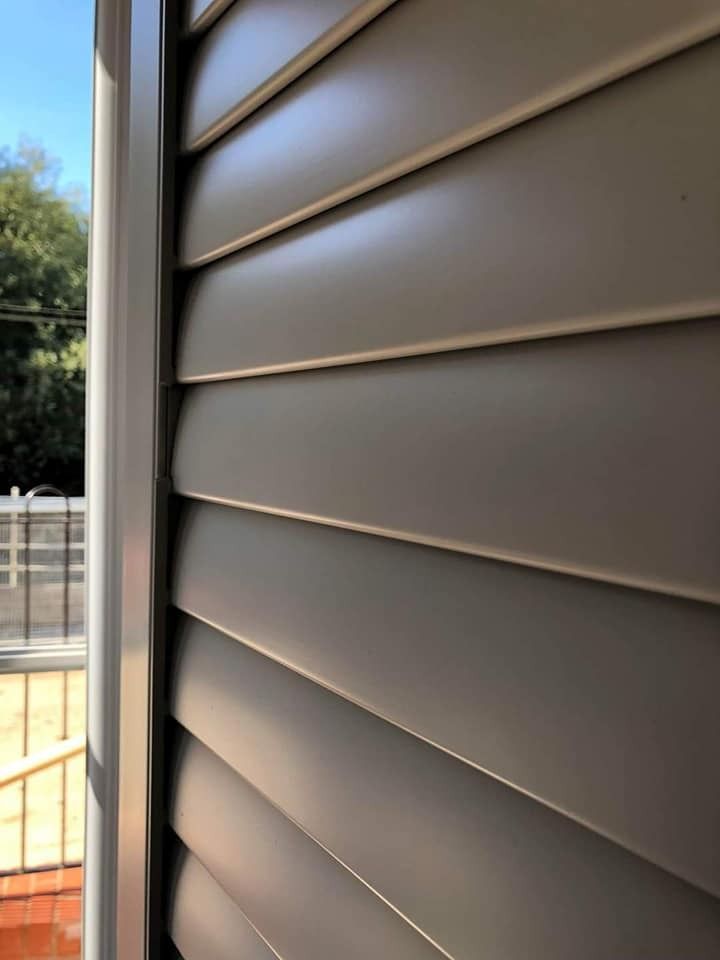
They’re made from a premium extruded composite; a dense, manufactured substrate that’s consistent in structure throughout. Unlike natural timber, which varies in grain, density and moisture content from one piece to the next, composite is produced to a controlled specification every time. There’s no natural variation to manage, no unpredictable behaviour and no weak spots buried in the material.
High-quality composite shutters are also reinforced with an aluminium core, which provides their structural backbone. It prevents the louvres and frames from twisting, bowing or racking under pressure, and keeps everything operating smoothly long after installation.
That combination delivers most of the benefits of composite shutters we’ve covered below:
They won’t warp, swell or lose their shape
Natural wood moves. It absorbs moisture, expands and contracts when the temperature changes, and behaves differently depending on the grain and how the timber was dried.
In a controlled environment, that movement can be managed. But in bathrooms, kitchens, south-facing living rooms, conservatories and rooms with underfloor heating, it’s a slow but consistent problem.
Over time, wood’s natural movement causes louvres to go out of alignment. Frames start to rack. Panels that once sat flush stop closing properly. The finish cracks as the material beneath it shifts. None of it happens overnight, but it compounds, and eventually the shutter stops performing as it should.
Composite shutters don’t behave that way. Because they’re manufactured from uniform material, they respond to temperature change and pressure in a more consistent, predictable way. The aluminium core adds further stability, keeping the structure true regardless of what the room puts it through.
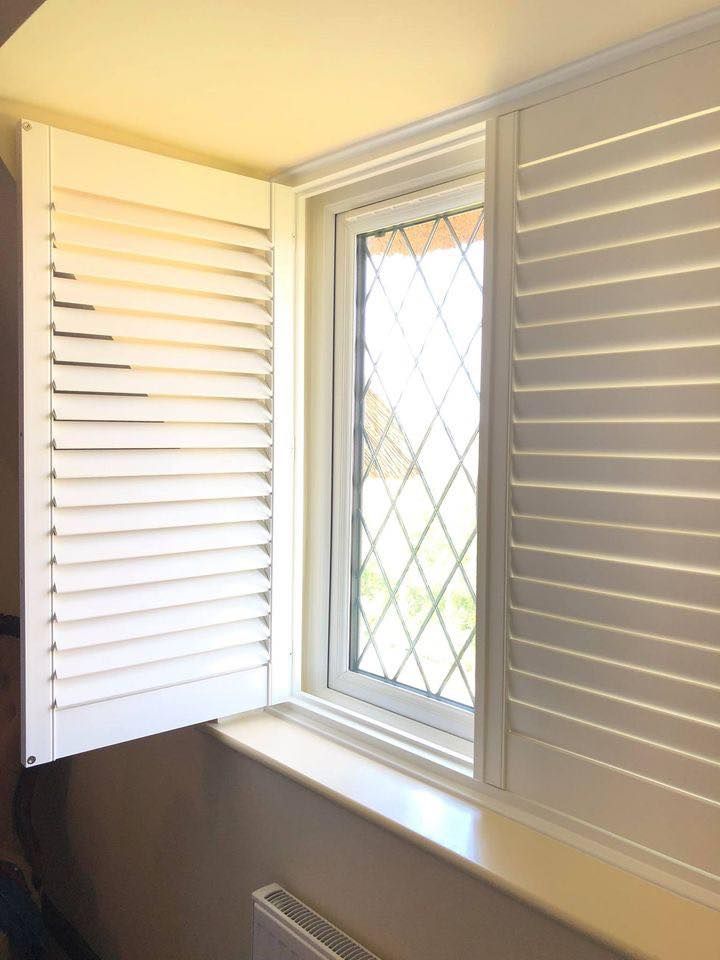
A composite shutter fitted in a bright, south-facing bay window, or in a bathroom that fills with steam every morning, will still be straight, correctly aligned and operating smoothly years later.
Fully waterproof, anywhere in the home
Moisture is the hardest test for any window dressing, and the gap between composite and timber is clear.
Composite shutters are fully waterproof. They don’t absorb moisture, swell, bubble or degrade when exposed to steam, condensation or humidity. The finish doesn’t peel. The structure doesn’t soften.
With timber, moisture is a slow-moving problem. It works its way into the wood over time, causing swelling that distorts the louvres and frames, and paint that starts to lift and flake as the material beneath it shifts. In rooms with poor ventilation or frequent temperature changes, these issues can appear within a couple of years, regardless of how carefully the shutter was installed.
Composite sidesteps these problems. Because the material doesn’t absorb water, none of that deterioration occurs. The shutter installed on day one will look and operate the same way five years later.
Composite also opens up the whole house. Being able to specify the same product across every room in a property without switching to a different solution for bathrooms and wet rooms makes the conversations you have with your customers easier.
A surface that holds up over time
A composite shutter’s surface finish is engineered, rather than applied to a natural substrate.
With timber, the finish is only as stable as the material underneath it. As the wood moves, through moisture absorption, temperature fluctuations or the repeated stress of daily use, the surface eventually follows. Paint lifts, cracks and flakes. The finish that looked sharp on the day of installation starts to look tired, and when it does, the customer’s options are repainting or replacement.
Composite shutters resist the scratches, knocks and everyday wear that accumulate in busy homes. The material doesn’t dent in the way that timber does. And because composite’s finish is engineered to resist fading, it holds its colour for the lifetime of the shutter.
Insulation
Composite shutters have excellent thermal insulation properties.
They reduce heat loss through windows, helping maintain a more consistent room temperature. For customers who are thinking about their energy bills, that’s a benefit that can compound over years of use. It’s a helpful point to raise with your customers who might not have thought to ask about it.
Composite shutters also absorb and block sound more effectively than most wooden shutters, blinds and curtains do. In urban properties, or any room that overlooks a busy road, the difference is noticeable. Customers don’t always anticipate this benefit when they’re looking to buy, but they tend to appreciate it once their shutters are in.
Low maintenance for the long term
Maintenance is one of those things customers don’t think much about when they’re buying. But it can shape their view of the product, and the person who fitted it, over the years that follow.
Composite shutters don’t need sanding, treating or repainting. An occasional wipe-down is all they require. The aluminium core and moisture-resistant materials mean there’s no warping, peeling or flaking to deal with, and nothing about the shutter changes over time that demands the customer’s attention.
Timber is a different story. Wooden shutters look their best when they’re properly maintained, but maintaining them takes time and can be expensive.
Repainting, treating and repairing surface damage can all add up over the lifespan of the product, especially in rooms where the shutter is exposed to moisture, humidity or strong direct sunlight.
A 10-year warranty
Every composite shutter from
British Made Shutters comes with a 10-year warranty. It means you can give your customers confidence in what they’re buying when you put your name behind the product.
Every shutter is bespoke and made to measure, so the fit is right from the start. Everything is manufactured in the UK, in Evesham, which means short lead times, quality control and a team that’s accountable from order to delivery.
How can British Made Shutters help?
When you specify or fit a shutter, you’re putting your name behind the product. A shutter that warps, fades or starts generating problems two years after installation is a problem that can come back to you.
Composite removes most of those risks. The material is predictable, the performance is consistent, and the 10-year warranty means both you and your customers have something solid to rely on.
At British Made Shutters, we work with trade partners across the UK, supplying high-quality, bespoke composite shutters in a wide range of designs, colours and hinge styles. To find out more about opening a trade account, or to request samples, get in touch today.
Share this blog