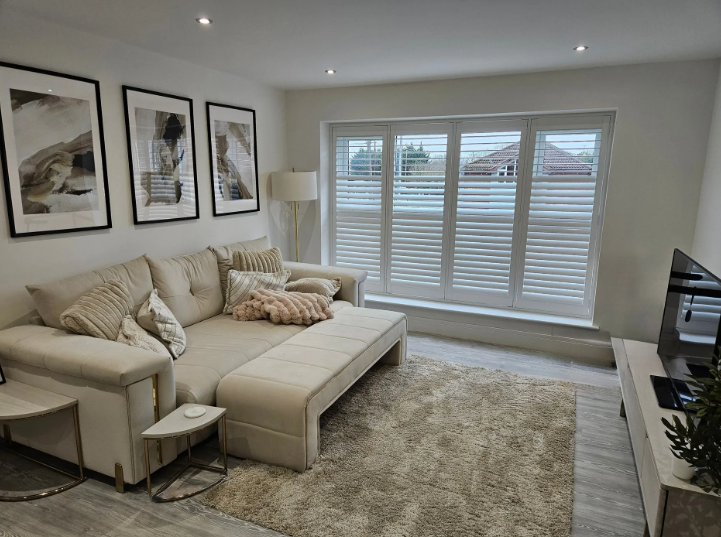
Open Plan Living Enhanced with Tracked Solutions

Open plan living has become a go-to choice for homeowners who want a more open, connected space. Combining the kitchen, dining, and living areas into one can make your home feel bigger and lighter and helps to keep things social and inviting. Whether you're chatting with someone while cooking or watching the kids do homework from across the room, this setup makes it easier to enjoy daily life together.


But one common challenge is how to manage the space when you need a bit of separation. For example, you might want to block light, add privacy, or reduce noise during certain parts of the day. This is where tracked shutters come in. They’re a great solution for open areas, helping you add purpose to large spaces without giving up that spacious feel.


What Are Tracked Shutters?


Tracked shutters are panels that slide along a track fixed to the floor or top brackets, allowing you to fold or move them sideways with ease. Unlike regular hinged shutters, these are designed for larger openings or areas that need more adaptability. You’ll often see them used with sliding doors or wide windows, but they work just as well across open plan zones to add flexibility where needed.


Here’s how they’re different from standard shutter panels:


- They move sideways instead of swinging open, making them less invasive in small areas

- They allow for easier control over how much of the space is opened or closed off

- They can cover wider spaces with fewer gaps, giving a cleaner look


Tracked shutters are also great for homes that need clear walkways or where traditional swinging shutters might get in the way. If you’ve got bifold doors, floor-to-ceiling windows, or an open plan ground floor, they’re a neat match.


Enhancing Open Plan Living With Tracked Shutters


In open plan homes, balancing space and structure is a common challenge. You want areas to flow into each other, but sometimes you still need zones for different uses, like a quiet study corner or a more private dining space. Tracked shutters give you that balance by working like moveable dividers.


One of the best features is how easy it is to open or close them. You can slide them across to shut off a section when needed, then tuck them neatly aside when you're done. It’s a bit like having sliding doors, but with more control over light and airflow.


Tracked shutters can:


- Break up space without building new walls

- Help keep heat in one area during colder months

- Offer a clear visual separation between zones, like from kitchen to lounge


Design is another strong point. These shutters come in a range of finishes and materials, so they often blend in smoothly with modern décor. If your furniture and fittings are clean and minimalist, tracked shutters fit right in without standing out. They let you keep an open and airy look when they’re folded away, or create a bold feature when stretched across a section.


One local example we’ve come across is from a family in Stockport with an open-plan kitchen and snug. They loved the open space but needed somewhere quiet for their kids to focus during homework time. Tracked shutters gave them the flexibility to divide the room in the evenings, and by the next morning, the whole space opened back up for breakfast and family time. The shift was quick and made a noticeable difference in how they used each part of the room.


Practical Benefits Of Tracked Shutters


While style and space flexibility are strong draws, tracked shutters also bring very real, day-to-day practical benefits to an open plan home. These aren’t just about looks. They help solve common problems that naturally come with having fewer walls and open sightlines.


One major benefit is noise control. Open plan layouts make it easy for sound to travel, whether it’s cooking noises from the kitchen, the TV playing in the living area, or children talking from one end of the space to another. Tracked shutters help you tone that down when needed. By sliding them into place, they can limit how much sound carries across rooms and create a quieter atmosphere where it’s needed most.


Another big plus is improved light control. Without multiple rooms and internal doors, natural light doesn’t have many barriers. That’s great when you want brightness, but not so helpful when sunlight causes glare on screens or heats up areas unevenly. Tracked shutters give you the ability to filter or block light at specific times of day, without having to cover up every window completely. This also means you can tailor each section of the open space for different purposes. Maybe soft lighting near the sofa but a brighter zone by the dining table.


Privacy is also easier to manage. Whether you're taking a video call, hosting guests, or simply want some alone time, it’s much easier to create that separation without major changes to your layout. When you’ve got friends staying over or children studying at the kitchen island, being able to section off part of your open space can be a big help.


Other helpful effects include:


- Keeping heat in selected zones, especially in colder months

- Stopping drafts from crossing the entire space unchecked

- Adding an extra layer between windows and the room to assist insulation


When set up properly, tracked shutters contribute comfortably and quietly to daily life without making the home feel broken up or difficult to move through.


Choosing And Installing Tracked Shutters


Getting the right tracked shutters for your home starts with understanding how you use your space. If you’re mostly aiming to break up a large lounge or kitchen area during the evenings, you’ll want a solution that’s easy to move and lightweight. If it’s more about managing light through large windows, look for panel materials and finishes that reflect or block sunlight well.


Here are a few things to think about before choosing your shutters:


1. Layout and pathways – Make sure there’s enough space alongside the track for the shutters to stack when fully opened

2. Purpose – Do you need light control, privacy, or both? Knowing this helps decide the material and style

3. Finish – Match your shutters with your current furniture or flooring. White and wood tones tend to work well in most homes

4. Maintenance – Some finishes are easier to wipe and clean than others, especially if you have pets or young children

5. Track placement – Tracks can go at the top, bottom, or both depending on the setup. Each has its use, but this will guide what type of shutter system suits you best


Professional installation makes a big difference to how smooth and reliable your tracked shutters will be. With large panels and precise track fittings, small measurement errors can affect how well they function. Getting a professional to install them ensures everything lines up neatly, moves correctly, and lasts longer. A poorly fitted shutter can turn something convenient into something frustrating.


Time to Rethink Your Space in Stockport


Open plan living can do a lot for a home’s atmosphere, flow, and function, but it’s all about finding the right balance between openness and control. Tracked shutters give you options. Use them to shape your home around your life, adjusting light, privacy, and layout whenever it suits you.


For Stockport homes, especially those with wide extensions or newly built layouts, tracked shutters offer a reliable and stylish way to get more out of your space. They blend in well with modern design, are easy to use daily, and bring very real practical benefits behind their good looks. Now’s a perfect time to think about how your open areas are working for you. Whether that means keeping things warmer during winter or just carving out a quiet corner now and then, tracked shutters could be just what you need.


Feeling inspired to enhance your open plan living space? Tracked shutters could be just what you need to bring comfort and flexibility to your home. They offer practical solutions and style that perfectly fit any modern space. To learn more about how they can transform your interiors, explore our range of tracked shutters. With British Made Shutters, you can take the next step in elevating your home's aesthetic and functionality.

Share this blog

By QBD Analytics August 12, 2026
From traditional timber shutters to the rise of modern composite
By Mya Lyes August 6, 2026
If you’re an experienced fitter, installing composite shutters should be fairly straightforward. This blog explains everything you need to know. You know when a shutter installation is going well. The order matches the survey, the panels align, and you can focus on the fit instead of correcting problems caused during specification, manufacture or delivery.  You also know how quickly one issue can disrupt the job. A missing component, damaged panel or incorrect configuration can delay your next appointment, lead to a return visit and leave you explaining the problem to the client. If you’re an experienced fitter, composite shutters should be fairly straightforward to install. Their ease of installation comes from giving you a made-to-measure, stable and checked product that reduces avoidable on-site work. British Made Shutters produces bespoke composite shutters for installers in the UK. Here’s everything you need to know. What makes composite shutters the right choice? Composite shutters are made from a premium extruded material, engineered to a consistent specification for every louvre, frame and panel. An aluminium core runs through the structure, giving it the rigidity to resist twisting, bowing and racking under everyday pressure. That construction is what makes composite shutters perform long after installation. The material is fully waterproof, so shutters can go into bathrooms, kitchens and wet rooms without restriction. They won’t warp, peel or flake, and the finish is engineered to hold its colour for the lifetime of the product. Insulation is another strength. The density of the material blocks sound and reduces heat loss through the window, a benefit your customers notice once they’re living with the shutters, even if they didn’t ask about it at the point of sale. Maintenance stays minimal. Composite shutters don’t need sanding, treating or repainting, just an occasional wipe-down. For trade professionals who need a product that still looks right years after the job is finished, that combination of strength, waterproofing and low upkeep is what makes composite the reliable choice. Every shutter from British Made Shutters is bespoke, made to measure and backed by a 10-year warranty, manufactured at our workshop in Evesham. Here’s what makes them so easy to install: Made-to-measure manufacture reduces site work An accurate survey forms the foundation of a smooth installation. You need to account for handles, skirting, tiles, window boards, uneven reveals and out-of-square openings. Once you’ve captured those details, we do most of the work before the shutters even reach the property. This means there’s no need for you to adapt a stock product or try to make standard sizes suit a non-standard opening, although some packing, scribing or adjustment may still be required, particularly in older properties. This all makes labour easier to estimate, quotes more accurate and fitting schedules more reliable. Consistent materials support a predictable fit Timber varies in grain, density and moisture content. Composite is manufactured to a controlled specification, giving you greater consistency between components and orders. At British Made Shutters , we use extruded composite, with aluminium reinforcement inside the louvres and the stiles to provide rigidity. This helps the shutters remain stable and reduces the risk of movement caused by changes in humidity. Composite shutters also suit kitchens, bathrooms and other rooms with typically high humidity. Here, composite shutters reduce ongoing moisture-related concerns. Because the material is more consistent, the panels are easier to align and should open and close as intended, with less adjustment during fitting and less ongoing work for the client to worry about. Factory checks reduce problems on site A minor manufacturing or packing issue can become a major inconvenience once you’re standing in the client’s home. British Made Shutters assembles and checks each order at our Worcestershire factory before dispatch. This gives our team an opportunity to identify issues with the finish or order accuracy before you receive your delivery. Of course, you should still inspect each order when it arrives. Confirm that the delivery is complete, matches the paperwork and hasn’t suffered damage in transit. Finding a problem before the installation date gives you more time to resolve it with us without disrupting the client. The specification matters as much as the material The wrong specification can make a simple installation harder. You should choose the panel divisions, frame type, hinges, louvre size, tilt mechanism and opening method based on the opening and how the client will use the shutter. For instance, a wide opening may need a tracked system, while handles, furniture or limited window access may restrict panel movement. Make careful choices with your client to avoid clashes, maintain access and provide them with shutters that work as everyone intended. British Made Shutters offers full-height, café-style , tier-on-tier and tracked shutters. This range allows you to specify the shutters to each job, based on the opening and design requirements. Some jobs inevitably raise questions about bay layouts, handle clearance, tracked systems or panel configuration. We provide you with a dedicated, named contact who can help you with everything from your quotation through to delivery. How can British Made Shutters help? Every hour you spend correcting a preventable problem comes out of your margin. When the shutters fit as expected, you can finish on schedule, avoid return visits and move on to the next job. British Made Shutters supports that process with made-to-measure manufacture, factory checks and help when you need it. Every order is produced in Worcestershire and backed by a 10-year warranty. Get in touch with our team to learn more about our composite shutters, made here in the UK, and become a trade partner .
By Mya Lyes August 6, 2026
We’ve put together this list of factors affecting the price of composite shutters to help you guide your clients towards the right specification and prepare a more accurate quote. Made-to-measure shutters aren’t priced like an off-the-shelf window covering. We design and manufacture each order based on the exact dimensions, shape, style, colour and specification you provide. That means two shutter installations can look similar at first glance but have very different material, manufacturing and fitting requirements. British Made Shutters is a UK-based composite shutter manufacturing company. We’ve put together this list of factors affecting the price to help you guide your clients towards the right specification, prepare a more accurate quote and protect your margins. Made-to-measure manufacturing Of course, every window opening is different. A precise fit depends on accurate opening measurements and the correct panel sizes, stile positions, frame dimensions and clearances. This bespoke process requires more planning and production control than supplying a standard-sized product, but it gives your client shutters designed specifically for their windows. Window size Larger windows usually require more material, larger panels, additional hinges or more complex frame structures. They can also require more manufacturing time. The relationship isn’t always as simple as doubling the window size and doubling the price, however. The final price depends more on the panel layout, structural requirements and the chosen shutter style. Window shape Composite shutters for standard rectangular windows are generally more straightforward to design and manufacture than unusual shapes. Arches, angled windows and other special shapes require additional design work and carefully controlled manufacturing. This can increase the cost. A detailed survey is important here. Even a small measuring error may significantly affect how the finished shutter sits and follows the shape of the opening. Mistakes could lead to needing to reorder. Shutter style Different shutter styles require different quantities of material, hardware and manufacturing work. At British Made Shutters, we produce full-height , café-style, tier-on-tier and tracked composite shutters. Each comes with a different construction process and operating requirements. We can help you select the most suitable based on your client’s budget and priorities. Material Material affects the price, durability, stability, appearance and long-term performance of your shutters. Our composite shutters combine a robust engineered core with reinforced stiles, helping them resist moisture, everyday wear and movement or distortion over time. This gives your clients dependable performance and lasting value.  Frame type Our standard frame profiles are all priced the same, so you can choose the best option for the opening without increasing the product price. The Deep F Frame costs more because its thicker profile requires additional material. It’s a practical solution where the specification requires greater depth or additional clearance. Colour Standard colours use our usual manufacturing process, while bespoke painted colours require additional preparation, painting, handling and quality checks. This extra work increases the price and lead time but allows the shutters to coordinate more closely with the client’s interior or existing joinery. Optional upgrades Invisible tilt mechanisms, hidden hinges and premium hardware can increase the price because they use different components or require extra manufacturing work. Include these options in the original specification so the quotation covers the client’s chosen design and hardware. Installation complexity The product price is only one part of the overall project cost. Difficult access, deep reveals, high-level windows, multiple storeys and awkward installation areas may increase the time, equipment, or labour required. Include these requirements when calculating your installation costs. Material and manufacturing quality Higher-quality materials, consistent components, accurate manufacturing and thorough quality checks contribute to the price and overall value of made-to-measure shutters. However, these processes and procedures also reduce the risk of misaligned panels, uneven finishes, damaged parts and fitting problems, which could otherwise lead to unexpected costs. Warranty and after-sales support A comprehensive warranty and reliable after-sales support may be reflected in the price. This support gives you access to replacement parts, technical advice and practical help if a problem develops, reducing delays and making it easier to resolve issues for your client. Why composite shutters deliver exceptional lifetime value Of course, it’s not just about price. While they may cost more than wooden or uPVC shutters, composite shutters offer excellent return on investment. Composite shutters are made from a premium extruded material, manufactured to a controlled specification every time. Wood varies in grain, density and moisture content from one piece to the next. uPVC is hollow-profiled and can feel insubstantial on larger window spans. Composite has neither problem. Every louvre comes out of the same process, with an aluminium core reinforcing the stiles against twisting and bowing. Wood absorbs moisture, which causes warping, swelling and cracking in bathrooms, kitchens and any room with variable humidity. uPVC resists water better, but its surface can discolour and turn brittle under direct sunlight, and that damage can’t be reversed. Composite is fully waterproof throughout, with no surface treatment involved, so it holds its shape and finish in every room of the house. The quality shows in the finish, too. Composite doesn’t dent the way timber does, and the colour is engineered to resist fading, unlike painted wood, which needs repainting, or uPVC, which can yellow over time. For trade professionals comparing materials, composite offers a level of consistency that wood and uPVC can’t match. Get a quote for your next shutter project British Made Shutters manufactures bespoke composite shutters for retailers, blind companies, installers, interior designers and developers throughout the UK. Send us your measurements and specification, and our trade team can help you confirm the available options and prepare an accurate quotation for your next made-to-measure shutter order.
By Mya Lyes July 9, 2026
Nobody buys shutters for the insulation. They buy them because they like how they look. Yet somewhere near the end of the conversation, the question of whether they’ll keep the room warmer or quieter might crop up. Insulation is one of those benefits of composite shutters that doesn’t show up on day one. Your customer can see the colour and the style of the louvres before they order. But they won’t feel the difference in their heating bill or the noise from the road until they’ve lived with their new shutters for a few weeks. That’s why it’s worth raising before they ask, not just answering when they do. This blog covers how composite shutters perform in terms of heat and sound insulation and what that means for the conversations you’re having with your customers. How composite shutters insulate Composite shutters’ insulation properties come down to their material and fit. They’re dense by design. That density, combined with the aluminium-reinforced core running through the frame, gives the shutter more mass than a wooden shutter with the same dimensions, and far more than a blind or curtain offers. Curtains and blinds only cover the glass. A well-fitted shutter covers the glass and seals against the surrounding frame, which is where a lot of heat and sound escape. That second part, the fit, matters as much as the material. A shutter that’s slightly too small for its opening leaves gaps around the edges, which is where the insulation value disappears, regardless of how good the material is. Because every shutter we supply is bespoke and made to measure, it’s built to the exact dimensions of the opening it’s going into. There’s no compromise on fit to get a product that’s ‘close enough’. That combination of dense material and precise fit is what gives our composite shutters the edge over the alternatives when it comes to insulation. Thermal performance and energy bills A well-fitted composite shutter reduces heat loss through the window. Anyone who’s retrofitting an older property, is mindful of their heating costs, or who needs to think about their EPC rating will care about this once you mention it, even if it wasn’t on their mind when they first got in touch. The practical benefit is a more consistent room temperature and less load on the heating system. It won’t replace double glazing or loft insulation, and it’s worth being upfront about that rather than overselling it. But, as one part of a room’s overall thermal performance, especially in homes where bigger upgrades aren’t on the table, well-fitted composite shutters can make a measurable difference. For customers weighing up shutters against blinds or curtains, composite really earns its place. Thinner materials don’t have the mass to hold in heat and keep the cold out in the same way. Acoustic insulation Sound works on the same principle as heat. The denser the material, the more effectively it absorbs and blocks noise from passing through. Composite shutters perform well here, particularly in rooms that overlook a busy road, a school, or anywhere else with consistent background noise. Bedrooms and home offices are the rooms where this tends to have the biggest impact, since they’re the spaces most people want to keep quiet. It’s a benefit many of your customers won’t think to ask about when they’re buying. Most are focused on light control and privacy, and noise reduction is something they notice only once the shutters are fitted. That makes it worth mentioning early in the conversation rather than waiting for them to bring it up, especially for any customer who’s mentioned noise, even in passing, while discussing what they want. How composite compares to wood and uPVC for insulation On insulation, the gap between composite shutters and the alternatives is clear. Wood can offer some insulation value when it’s new and properly fitted. But that performance doesn’t hold. As wood absorbs moisture and moves with temperature changes, gaps open up around the frame and louvres. Insulation that worked on day one can become inconsistent within a couple of years, and there’s no way to repair it short of repainting or replacing the shutter outright. uPVC has a different problem. Its hollow profile means there’s less material between the room and the window, so it has less mass to work with on either heat or sound. It does the job to a basic standard, but it isn’t built to match composite’s density. Composite doesn’t lose performance over time the way wood does, and it doesn’t start from a lower baseline like uPVC does. The density and the core stay exactly as they were on day one of installation, which means the insulation value stays consistent for the life of the product, not just the first year or two. Where this benefit matters most for your customers Some jobs make composite’s insulation properties an easier selling point, and it’s worth knowing which ones. Conservatories and north-facing rooms that struggle to hold heat are obvious candidates for composite shutters . So, too, are older properties with single glazing or draughty original windows, where the shutter needs to do more work than it would in a newer, better-insulated home. Anyone overlooking a busy road or a noisy junction will also get real value from the acoustic benefits that composite shutters provide, as will customers turning a spare room into a home office. They’re also perfect for rental properties, since landlords increasingly care about running costs and EPC ratings. A product that helps on both fronts is an easy addition to a refurbishment job. None of this needs to be a hard sell. It’s a case of asking the right questions early, such as whether the room overlooks a busy road, whether the house has had any insulation work done, or whether the customer’s mentioned their heating bills. The answers usually open the door to mentioning a benefit your customer hadn’t thought to ask you about. How can British Made Shutters help? At British Made Shutters, we manufacture and supply high-quality composite shutters to trade partners across the UK, with short lead times and a full range of designs, colours and hinge styles. Every shutter we supply is fully waterproof, reinforced with an aluminium core, and backed by a 10-year warranty. Because every order is bespoke and made to measure at our workshop in Evesham, the fit that makes the insulation work in the first place is built in from the start. So, the thermal and acoustic performance your customers when they order will be the same in ten years’ time.  To find out more about opening a trade account or to request samples, get in touch today.
By Mya Lyes June 15, 2026
This blog sets out the key benefits of composite shutters and why they hold up over time. Most people who choose shutters for their home start with how they look. The louvres, colour and style all matter, and are what most of the initial conversation focuses on. But it’s the secondary consideration, about what the shutter is made of, that will determine whether the installation will stand up five years down the line, or whether it will start causing problems you didn’t anticipate. For trade professionals who put their name behind every installation, the choice of materials is the detail that shapes everything else. It affects which rooms you can offer shutters for, how the product will perform over time, how often your customers might come back with issues, and what the job is worth to your business in the long run. Composite shutters are the go-to choice for installers and trade partners who want to offer their customers a robust, reliable and long-lasting product that delivers exceptional performance. This blog sets out what composite shutters offer and why those benefits hold up over time. What are composite shutters made from? Before covering the benefits, it’s worth understanding what makes composite different from wooden or uPVC shutters. They’re made from a premium extruded composite; a dense, manufactured substrate that’s consistent in structure throughout. Unlike natural timber, which varies in grain, density and moisture content from one piece to the next, composite is produced to a controlled specification every time. There’s no natural variation to manage, no unpredictable behaviour and no weak spots buried in the material. High-quality composite shutters are also reinforced with an aluminium core, which provides their structural backbone. It prevents the louvres and frames from twisting, bowing or racking under pressure, and keeps everything operating smoothly long after installation. That combination delivers most of the benefits of composite shutters we’ve covered below: They won’t warp, swell or lose their shape Natural wood moves. It absorbs moisture, expands and contracts when the temperature changes, and behaves differently depending on the grain and how the timber was dried. In a controlled environment, that movement can be managed. But in bathrooms, kitchens, south-facing living rooms, conservatories and rooms with underfloor heating, it’s a slow but consistent problem. Over time, wood’s natural movement causes louvres to go out of alignment. Frames start to rack. Panels that once sat flush stop closing properly. The finish cracks as the material beneath it shifts. None of it happens overnight, but it compounds, and eventually the shutter stops performing as it should. Composite shutters don’t behave that way. Because they’re manufactured from uniform material, they respond to temperature change and pressure in a more consistent, predictable way. The aluminium core adds further stability, keeping the structure true regardless of what the room puts it through. A composite shutter fitted in a bright, south-facing bay window, or in a bathroom that fills with steam every morning, will still be straight, correctly aligned and operating smoothly years later. Fully waterproof, anywhere in the home Moisture is the hardest test for any window dressing, and the gap between composite and timber is clear. Composite shutters are fully waterproof. They don’t absorb moisture, swell, bubble or degrade when exposed to steam, condensation or humidity. The finish doesn’t peel. The structure doesn’t soften. With timber, moisture is a slow-moving problem. It works its way into the wood over time, causing swelling that distorts the louvres and frames, and paint that starts to lift and flake as the material beneath it shifts. In rooms with poor ventilation or frequent temperature changes, these issues can appear within a couple of years, regardless of how carefully the shutter was installed. Composite sidesteps these problems. Because the material doesn’t absorb water, none of that deterioration occurs. The shutter installed on day one will look and operate the same way five years later. Composite also opens up the whole house. Being able to specify the same product across every room in a property without switching to a different solution for bathrooms and wet rooms makes the conversations you have with your customers easier. A surface that holds up over time A composite shutter’s surface finish is engineered, rather than applied to a natural substrate. With timber, the finish is only as stable as the material underneath it. As the wood moves, through moisture absorption, temperature fluctuations or the repeated stress of daily use, the surface eventually follows. Paint lifts, cracks and flakes. The finish that looked sharp on the day of installation starts to look tired, and when it does, the customer’s options are repainting or replacement. Composite shutters resist the scratches, knocks and everyday wear that accumulate in busy homes. The material doesn’t dent in the way that timber does. And because composite’s finish is engineered to resist fading, it holds its colour for the lifetime of the shutter. I nsulation Composite shutters have excellent thermal insulation properties. They reduce heat loss through windows, helping maintain a more consistent room temperature. For customers who are thinking about their energy bills, that’s a benefit that can compound over years of use. It’s a helpful point to raise with your customers who might not have thought to ask about it. Composite shutters also absorb and block sound more effectively than most wooden shutters, blinds and curtains do. In urban properties, or any room that overlooks a busy road, the difference is noticeable. Customers don’t always anticipate this benefit when they’re looking to buy, but they tend to appreciate it once their shutters are in. Low maintenance for the long term Maintenance is one of those things customers don’t think much about when they’re buying. But it can shape their view of the product, and the person who fitted it, over the years that follow. Composite shutters don’t need sanding, treating or repainting. An occasional wipe-down is all they require. The aluminium core and moisture-resistant materials mean there’s no warping, peeling or flaking to deal with, and nothing about the shutter changes over time that demands the customer’s attention. Timber is a different story. Wooden shutters look their best when they’re properly maintained, but maintaining them takes time and can be expensive. Repainting, treating and repairing surface damage can all add up over the lifespan of the product, especially in rooms where the shutter is exposed to moisture, humidity or strong direct sunlight. A 10-year warranty Every composite shutter from British Made Shutters comes with a 10-year warranty. It means you can give your customers confidence in what they’re buying when you put your name behind the product. Every shutter is bespoke and made to measure, so the fit is right from the start. Everything is manufactured in the UK, in Evesham, which means short lead times, quality control and a team that’s accountable from order to delivery. How can British Made Shutters help? When you specify or fit a shutter, you’re putting your name behind the product. A shutter that warps, fades or starts generating problems two years after installation is a problem that can come back to you. Composite removes most of those risks. The material is predictable, the performance is consistent, and the 10-year warranty means both you and your customers have something solid to rely on. At British Made Shutters, we work with trade partners across the UK, supplying high-quality, bespoke composite shutters in a wide range of designs, colours and hinge styles. To find out more about opening a trade account , or to request samples, get in touch today .
By Mya Lyes June 4, 2026
Wooden shutters have a long-standing appeal, but how do they hold up against composite? This blog sets out to answer that, to help you spec the right product with confidence.