Wooden shutters have a long-standing appeal, but how do they hold up against composite? This blog sets out to answer that, to help you spec the right product with confidence.
Wooden shutters have been around for a long time. They’ve become the default option for many customers, the material that feels like the right answer before they’ve even asked the question.
It’s an understandable position. Timber looks beautiful. It feels premium. There’s a reason it’s been the material of choice for years.
But looks and longevity are two different things, and the gap between them tends to widen the moment a wooden shutter meets a modern home.
So, is wood still the better material for your shutters? Or has composite changed the conversation?
This blog explores both sides of the argument.
What are composite shutters?
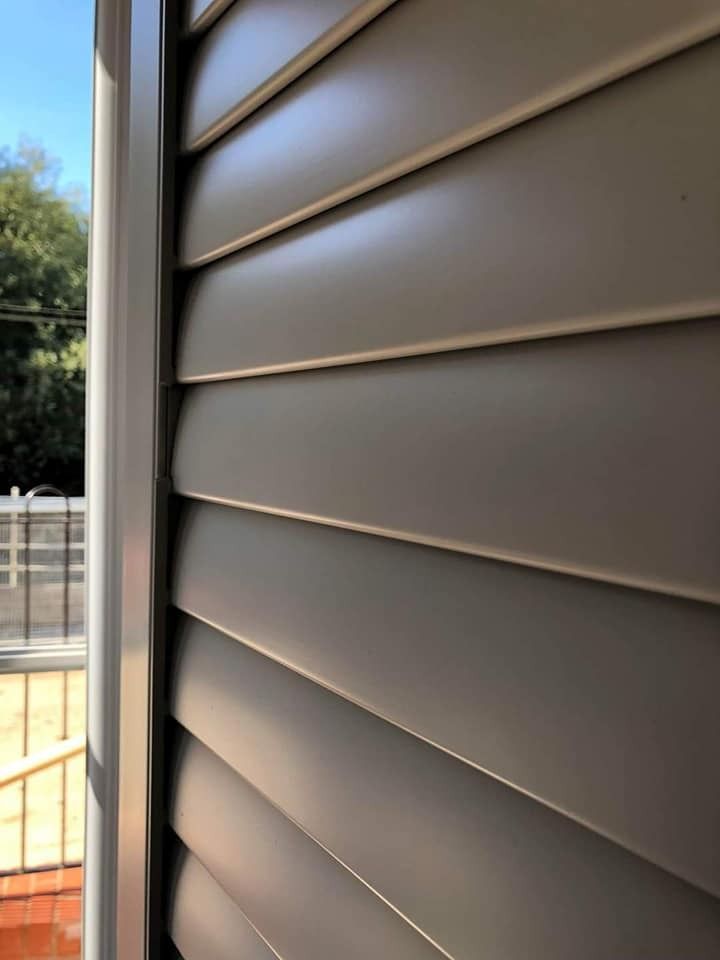
Composite shutters are made from a premium extruded material, engineered to specific tolerances rather than cut from natural timber. The consistency that’s impossible to achieve with wood is built into composite shutters from the outset. They offer the same density, structure and performance characteristics across every louvre.
High-quality composite shutters are reinforced with an aluminium core, which gives them their rigidity, keeping frames square and louvres straight under load, over time and across changing conditions. It’s the kind of reliability that natural timber, with its varying grain and moisture content, can’t replicate.
The result is a product that performs predictably, wherever it’s installed. For trade professionals who need to specify shutters to their customers with confidence, that matters.
How do wooden shutters perform?
There’s no denying that wooden shutters can look exceptional. The grain, the warmth and the sense of craftsmanship bring genuine appeal. It’s why timber has dominated the shutters market for so long.
But wooden shutters come with conditions attached.
Moisture is the primary issue. Wood absorbs it. In bathrooms, kitchens and rooms with limited ventilation, this can lead to warping, swelling and cracking. When the wood moves, the finish moves with it. Eventually, it doesn’t move back. Peeling, flaking and lifting are common in wooden shutters that have been exposed to humidity.
Even in drier environments, temperature fluctuations cause the wood to expand and contract, producing gaps, sticking the louvres and making the finish look tired long before the product is ready to be replaced.
Wooden shutters look their best when they’re new and well-maintained. Keeping them that way, though, takes effort. In some rooms, it’s a losing battle.
Where composite shutters have the edge
Composite shutters don’t absorb moisture. The material is fully water-resistant, which means it won’t swell, warp or crack in humid environments. The surface won’t bubble or peel, and the structure won’t degrade over time the way timber can.
A composite shutter can go in any room in the house, including bathrooms and wet rooms, without restriction. There’s no need to spec a different product for different spaces, and no need for difficult conversations with your customers about where wooden shutters will and won’t perform.
The aluminium-reinforced core keeps composite shutters straight. The louvres don’t bow, the frames don’t rack, and the shutters that leave the factory will still operate just as smoothly five or ten years down the line.
Wood can’t offer that same guarantee. The natural variation in grain and density means that no two timber shutters age in quite the same way. In many cases, the gap between a new wooden shutter and a five-year-old one is visible.
Composite is extremely tough. It resists the scratches, knocks and everyday wear that can happen in a busy home. Wood is more vulnerable to surface damage, and when it happens, refinishing is often the only option.
Composite shutters also provide consistent thermal and acoustic insulation. The material is uniform in density, so it performs reliably across the full surface of the shutter. Wood can offer some insulation benefit, but warping creates gaps, and the variation in grain means performance isn’t always predictable or even.
Finally, composite holds its colour. The finish is engineered to resist fading, and the material doesn’t shift in tone as it ages, the way wood can. Whatever colour a customer chooses at the point of specification is what they’ll have years later. Timber shutters typically need sanding down and repainting at some point in their lifespan, and the colour consistency of painted wood rarely matches that of a composite finish.
Long-term cost
Composite shutters are a premium product, but it’s hard to argue against the value they deliver over their lifespan.
Wooden shutters require regular maintenance. Sanding, repainting and refinishing all take time and cost money. The expense of keeping a wooden shutter looking its best over a decade often exceeds any initial saving on the purchase price.
Composite shutters are easier to maintain. Cleaning is straightforward. They won’t warp, peel or lose their finish. So, if you’re looking for a product you can recommend to your customers without reservation, composite shutters provide exceptional long-term value.
In the spirit of a fair comparison, it’s worth acknowledging where there’s still a case for wooden shutters. In listed buildings and period or heritage properties, where authenticity of materials is a specific requirement, timber may be the only appropriate choice. And some buyers just prefer the feel of natural wood.
However, for most buyers, the decision comes down to two things: how the shutters look on day one, and how they’ll still look five years later. On both counts, a well-finished composite shutter is difficult to distinguish from wood.
Which material performs better?
We might be biased, but… on durability, moisture resistance, structural stability, performance and long-term maintenance, composite comes out ahead. It’s not even a close call.
Wood has genuine appeal, and in the right setting, it’s the right material. But the conditions under which wood outperforms composite are narrow, and for most homes and applications, composite delivers a better result over time.
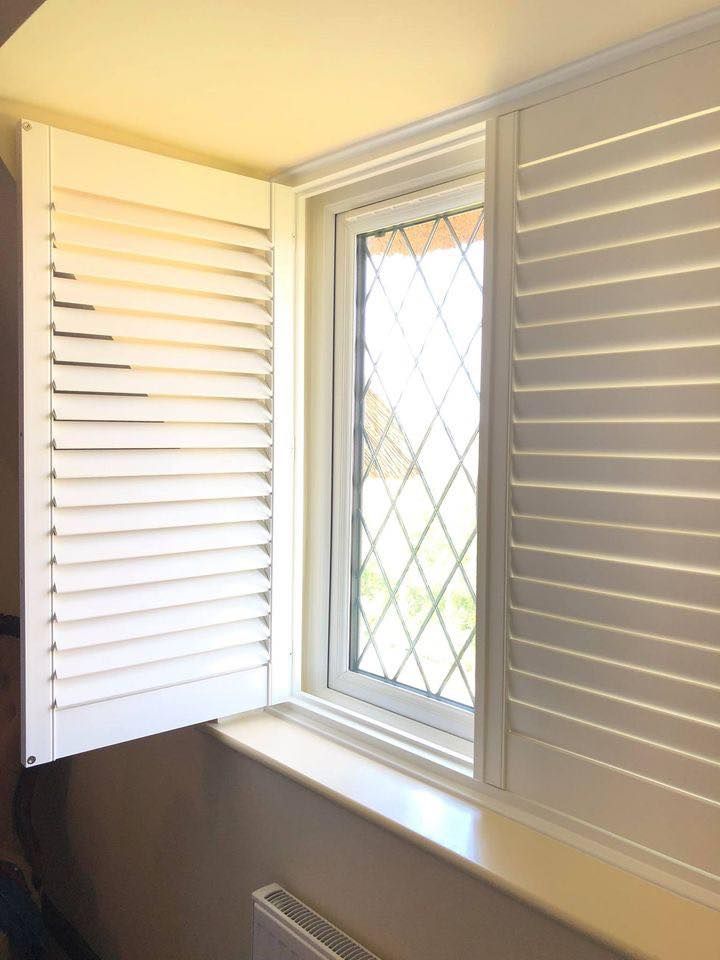
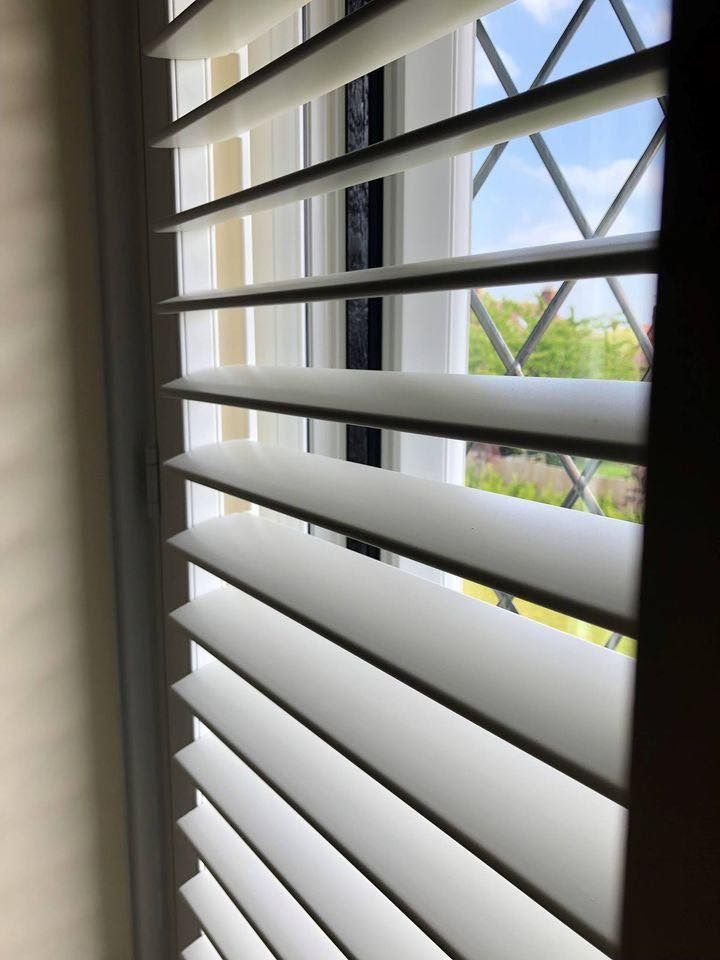
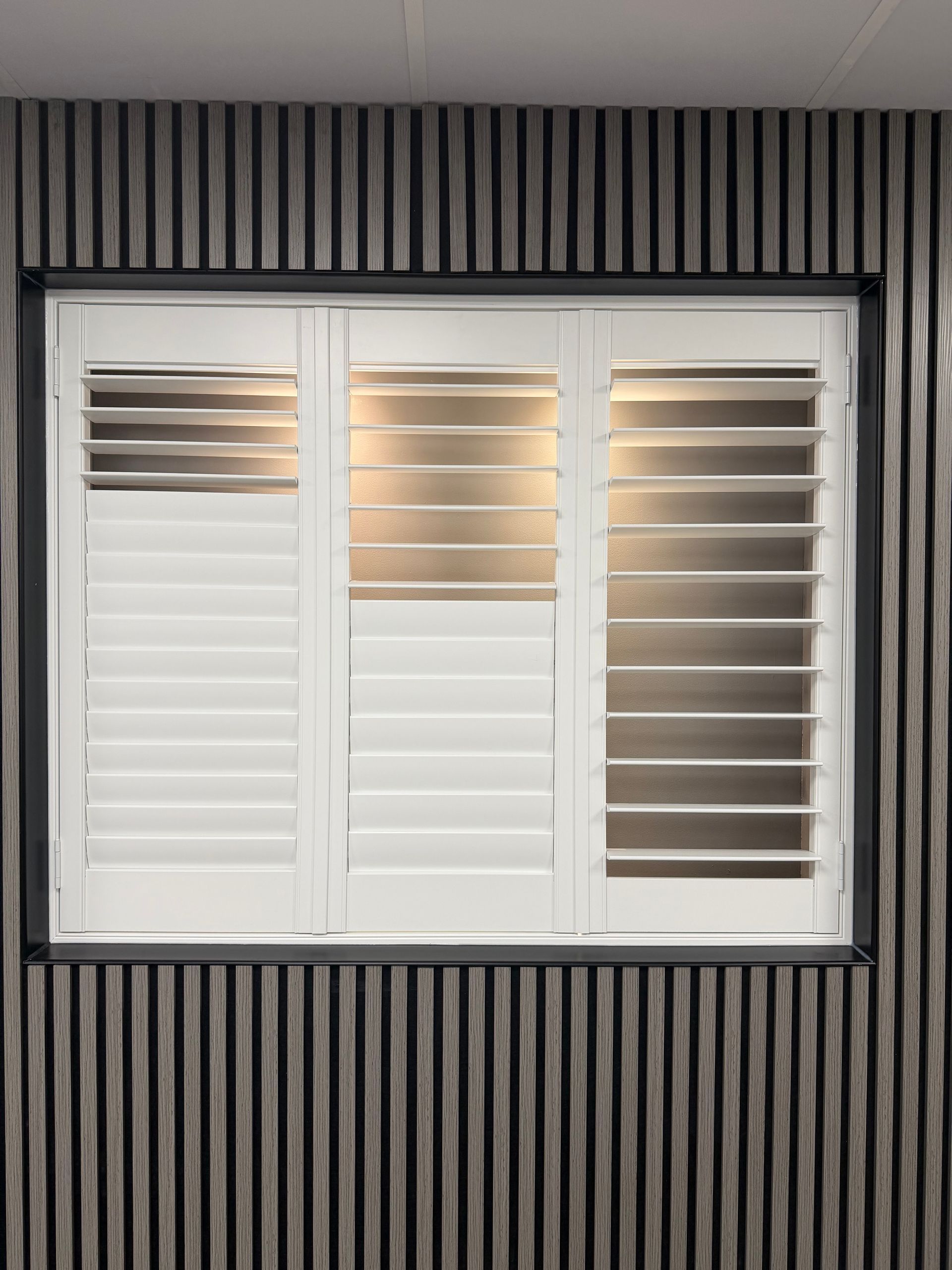
At British Made Shutters, we manufacture bespoke, made-to-measure composite shutters for trade partners across the UK. Every shutter is aluminium-reinforced, fully water-resistant and available in a wide range of colours, designs and hinge styles. All are backed by a 10-year warranty.
With short lead times and a straightforward ordering process, we keep your projects moving.
To find out more, ask about opening a trade account or request samples, get in touch today.
Share this blog