How much are window shutters?
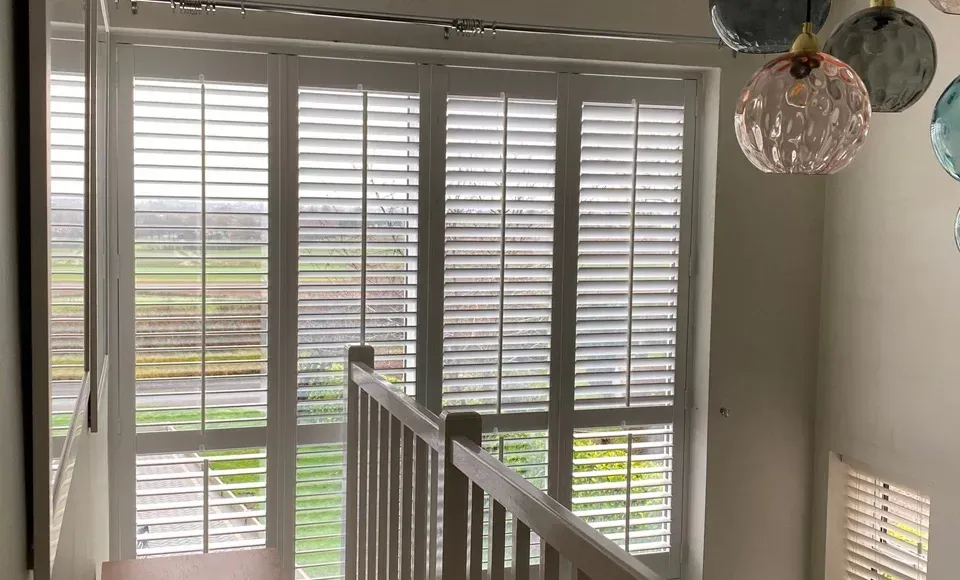
A staircase with shutters on the windows and a ceiling light.

Are you looking to add a touch of elegance and functionality to your windows in the UK? Window shutters are a popular choice! They not only enhance the aesthetics of your home but also offer privacy and light control. But how much do they cost? 


In this article, we're going to look into the vast world of shutters, what kinds there are and what different factors affect the costs.

What types of Window Shutters are there?

Before we can look at the prices of shutters, we need to look at the types available on the market. Let's explore three popular options: plantation shutters, tracked, and café-style and tier on tier.
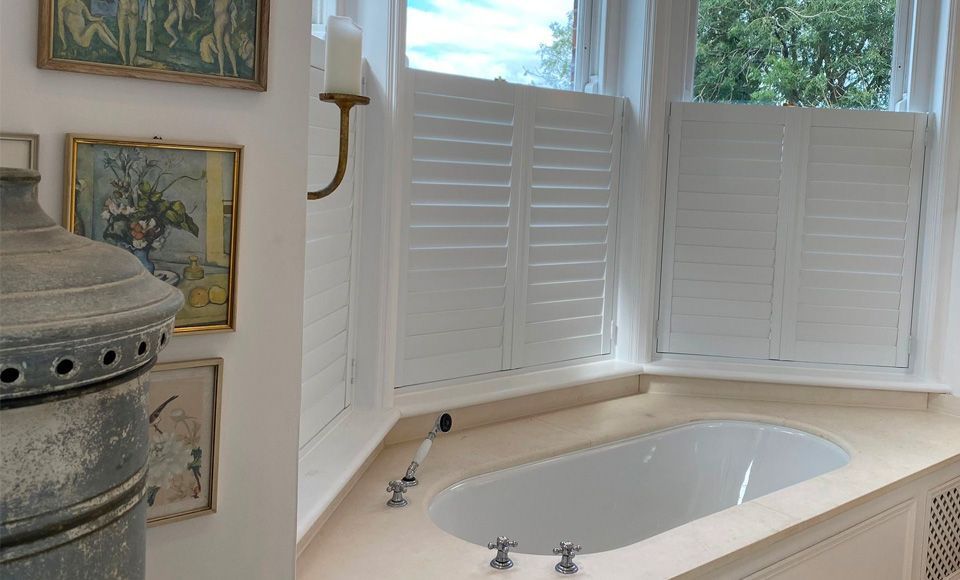
A bathroom with a bathtub and shutters on the windows.

Plantation or Full Height Shutters

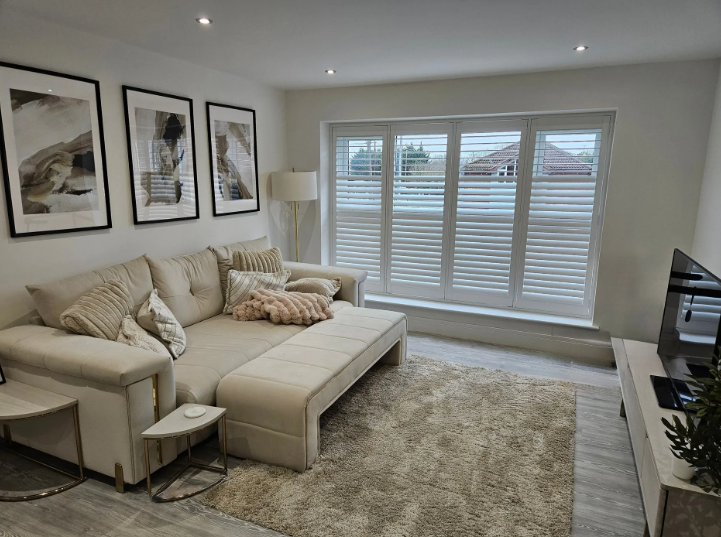
Plantation shutters are one of the most popular choices for window coverings. Full Height shutters are specifically designed to provide full coverage for windows and doors, ensuring complete privacy and allowing precise control over the amount of light entering the space.

Café-Style Shutters

Café-style shutters cover only the lower portion of the window, leaving the upper part open. This style originated from European cafes and brings a unique charm to any space. The Café-style shutters add a touch of elegance and character to your windows, creating a cosy and inviting atmosphere.

Tracked Shutters

Tracked shutters, also known as sliding shutters or track system shutters, are a type of window covering that operates on a track system. They consist of panels that slide horizontally along the track, allowing easy adjustment and control. Tracked shutters provide excellent privacy control, allowing you to adjust the position of the panels to block outside views as desired.


Tracked shutters offer insulation properties, helping to regulate the temperature inside your home. They can reduce heat loss in winter and minimise heat gain in summer, potentially saving energy. They're a popular choice for large windows and doors. They offer light control and privacy flexibility, making them suitable for various room sizes and layouts.

Tier-on-tier shutters

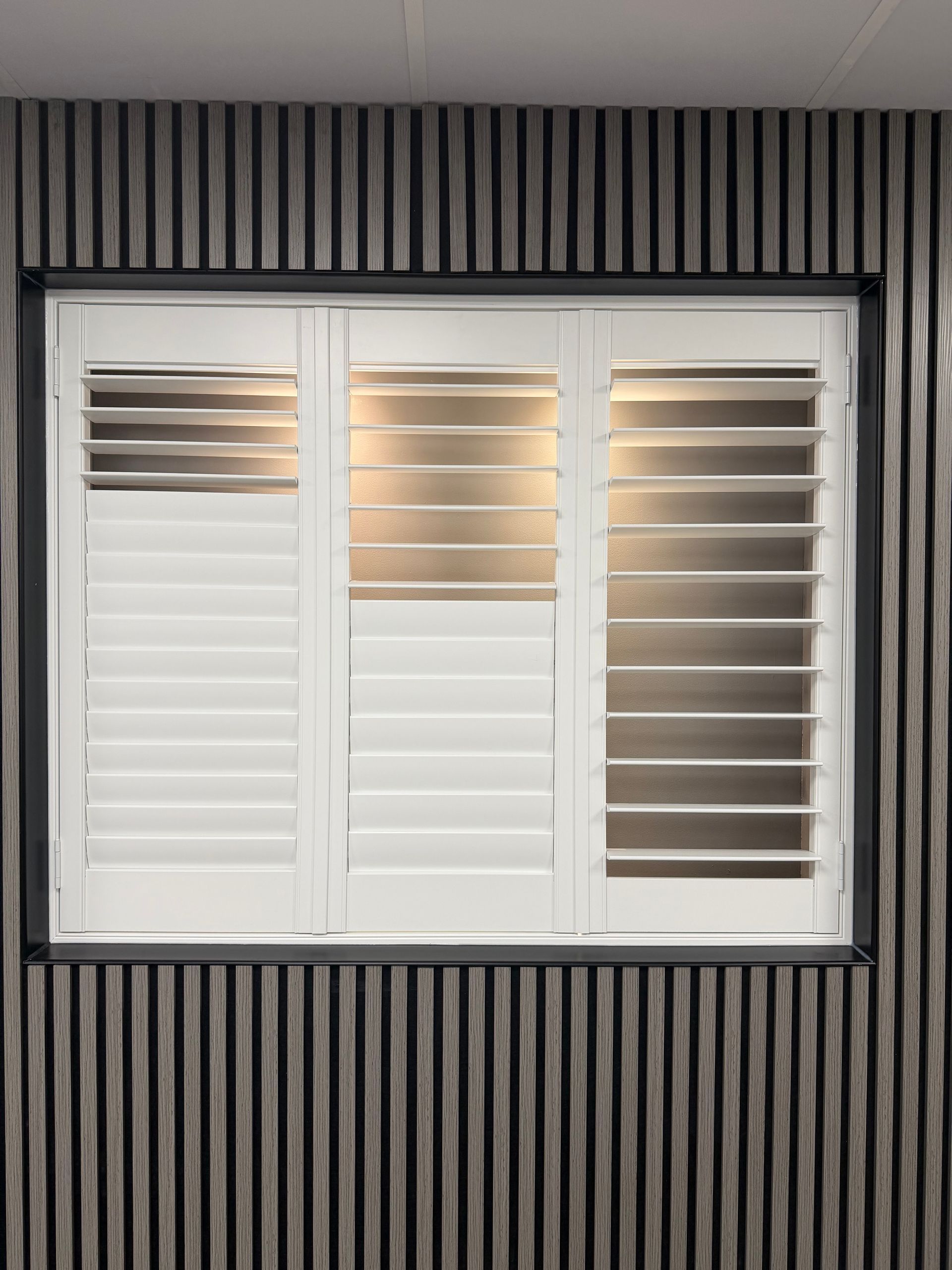
Tier-on-tier shutters are a versatile option that combines the benefits of both Full Height and Cafe Style shutters. This style features two panels, one stacked on the other, allowing for independent operation and control of the upper and lower sections. 


By closing the lower panels and leaving the upper ones open, you can enjoy privacy from street-level views while benefiting from the natural light streaming through the top section.


Tier-on-tier shutters add a touch of sophistication to any room. They are available in various materials, finishes, and louvre sizes, allowing you to customise the look to match your interior style.
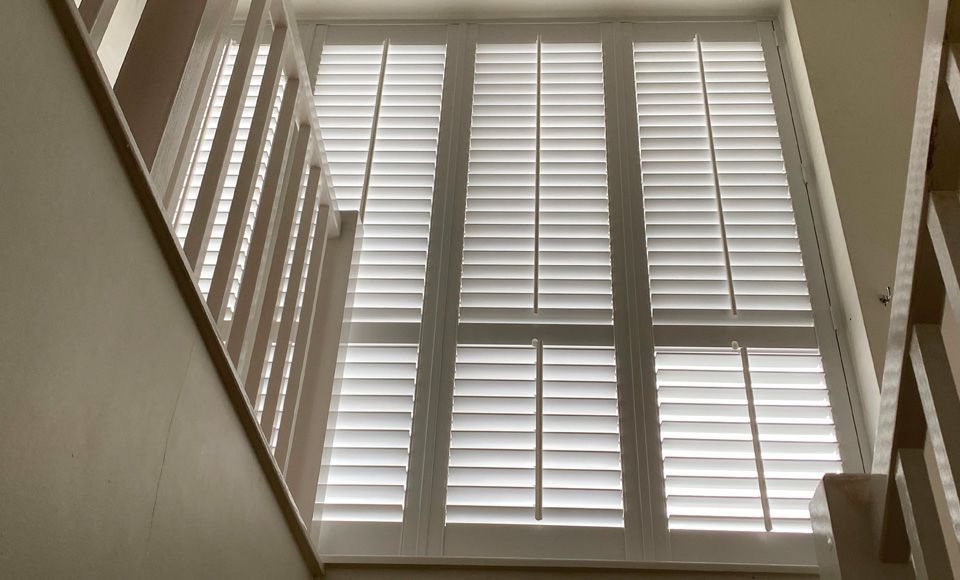
Looking up at a window with white shutters on it

So, how much are these window shutters?

While shutters can differ from style to brand, let's look at some base-level costs, so you have an idea what to expect. 


Entry-Level: The average cost for entry-level window shutters can range from £200 to £300 per square metre. These shutters are typically vinyl or composite wood and may have limited customisation options.


Mid-range: Mid-range window shutters, made from materials like basswood or medium-density fiberboard (MDF), can cost between £300 to £500 per square metre. These shutters offer more customisation options and finishes and may have additional features like hidden tilt rods.


High-end/Luxury: High-end or more luxury window shutters are made from premium materials like solid wood. These shutters can range from £500 to £1,000 per square metre. These shutters often come with extensive customisation options, speciality shapes, handcrafted finishes, and advanced features like motorisation.

What can affect the cost of shutters?

Different shutters come in all shapes and sizes, from cafe style to Tier-on-tier. Let's look at what can affect the overall cost so that you can make an informed decision when choosing your shutter blinds.


Material Quality: 

The quality of the materials used for shutters can significantly impact the cost. High-quality woods, such as cedar or mahogany, are more expensive than wood species like pine or poplar. Additionally, synthetic materials like vinyl or composite may offer affordability but may have a different premium look and feel than natural wood shutters.


Basswood

Basswood is a popular choice for interior shutters. It has a closed grain, making it ideal for painting and lightweight yet strong.

  • The average cost of Basswood shutters in the UK can range from £200-£250 per square metre.


Cedar

Cedar is a popular choice for exterior shutters due to its natural resistance to decay, insects, and moisture. It offers durability and a beautiful grain pattern.

  • The average cost of Cedar shutters in the UK ranges from £300 to £500 per square metre.


Pine

Pine is a versatile wood that can be used for both interior and exterior shutters. It is affordable and offers a warm, rustic look.

  • The average cost for Pine shutters in the UK is around £250 per metre.


Poplar

Poplar is another common wood species for interior shutters. It is known for its smooth texture and ability to hold paint well.

  • The average cost for Poplar shutters in the UK ranges from £180 to £300 per square metre.


Faux Wood

Faux wood shutters can offer the look of natural, real wood shutters at a more affordable price. The cost of faux wood shutters can vary depending on factors such as the size, customisation options, and the supplier.
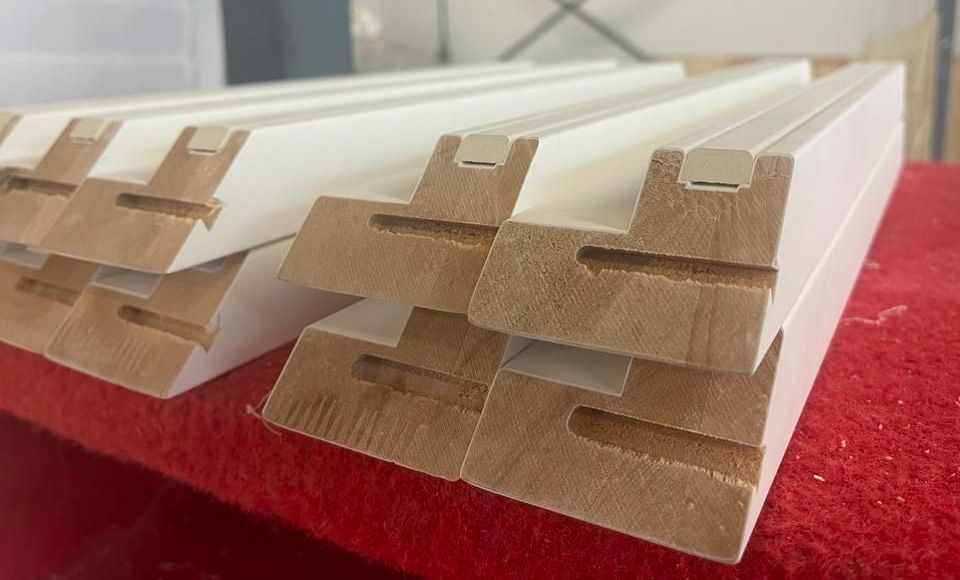
A stack of wooden pieces sitting on top of each other on a red table.

Size 

The size of the window or opening plays a role in determining the cost. Larger shutters require more materials and may involve additional manufacturing processes and installation considerations. As a result, larger shutters generally come with a higher price tag than smaller ones.


Style and Design 

Different shutter styles and designs can vary in cost. More intricate and elaborate designs, such as louvred shutters or speciality shapes, may require additional craftsmanship and customisation, leading to higher prices. More straightforward and standard styles may be more cost-effective.


Customisation Options

Adding custom features and options to your shutters can increase the overall cost. Customisation options include speciality finishes, specific paint or stain colours, decorative hardware, hidden tilt rods, or motorised operation. Each added customisation contributes to the complexity and uniqueness of the shutters, resulting in a higher price.


Installation

The cost of installation should also be considered. Professional installation ensures proper fit and functionality of the shutters, but it may come at an additional cost. The complexity of the installation process, such as the number of windows, accessibility, or any necessary modifications, can impact the installation cost.


Brand and Supplier

The brand and supplier you choose can affect the price of window shutters. Well-known brands or higher-end suppliers may have premium pricing due to reputation, quality assurance, customer service, and warranty coverage.


It's important to note that prices can vary significantly based on geographical location, market demand, and other factors specific to the region or supplier. To get an accurate cost estimate, it is recommended to consult with local shutter manufacturers or suppliers who can provide detailed quotes based on your specific requirements.
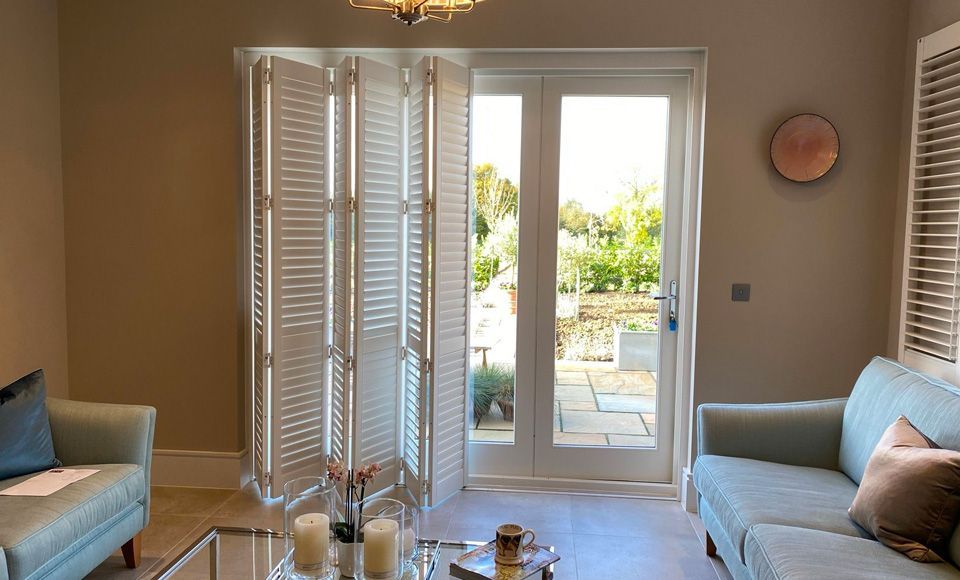
A living room with a couch , chair , coffee table and sliding glass doors.

Customisations

When it comes to window shutters, there are various customisation options and additional features that can enhance their functionality and aesthetics. Here are some common customisation options and their benefits and costs:


Motorisation: 

Motorised window shutters offer convenience and ease of use. With motorisation, you can control the opening and closing of your shutters with the touch of a button or through a remote control. The benefits of motorised shutters include enhanced privacy, improved light control, and increased energy efficiency. However, motorisation can add to the overall cost of the shutters due to the additional hardware, wiring, and installation requirements.


Specialty Shapes: 

Specialty-shaped shutters are designed to fit non-standard window shapes, such as arches, circles, triangles, or octagons. Having shutters customised to match your windows' unique shape can enhance your space's overall aesthetic appeal. The cost of specialty-shaped shutters can be higher than standard rectangular or square shutters due to the additional design and manufacturing complexities involved.


Finishes: 

The finish of your shutters plays a significant role in their appearance and longevity. You can choose from various finishes, including paint, stain, or natural wood finishes. Painted shutters offer a wide range of colour options and can be custom-matched to your decor. Stained finishes showcase the natural beauty of the wood grain. Natural wood finishes provide an elegant, timeless look. The cost of finishes can vary depending on the chosen finish's complexity and the project's size.


Other customisation options for window shutters may include decorative hardware, hidden tilt rods, or custom panel configurations. These options can further enhance the aesthetics and functionality of your shutters but may incur additional costs.


Choosing the right window shutters can significantly enhance the functionality and aesthetics of your space. Here are some practical tips to help you make an informed decision:
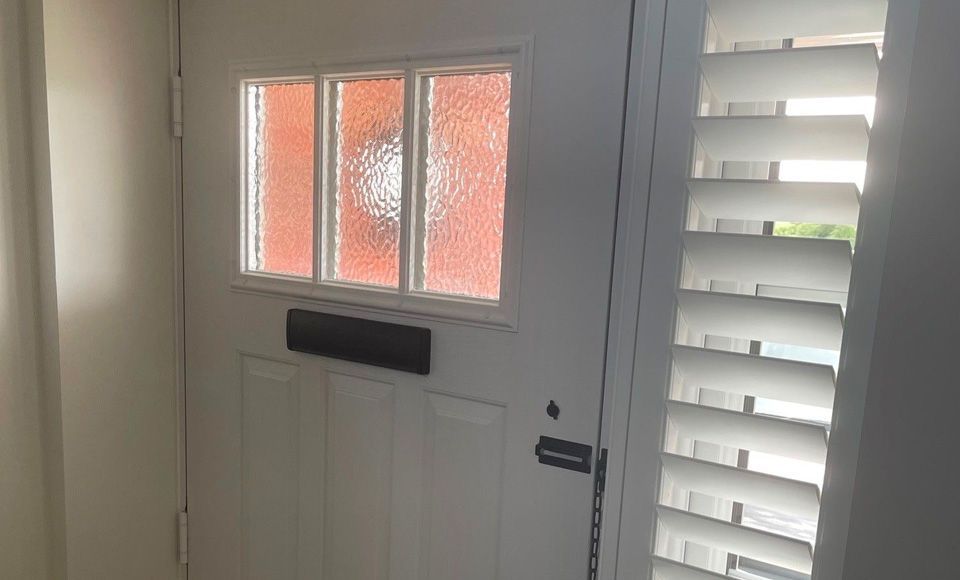
A white door with shutters on it and a window.

Tips to help with cost when choosing your shutters

  1. Measure Shutters Accurately: Before selecting window shutters, measuring your windows accurately is crucial. Shutters are made to measure height, width, and depth to ensure a proper fit. If you need clarification on measuring, consult a professional or refer to manufacturer guidelines for accurate measurements.
  2. Consider your needs: Determine your specific needs and preferences. Are you looking for shutters to enhance privacy, replace blackout curtains, or add a decorative touch? Consider factors such as the level of light control, insulation, and overall functionality that align with your requirements.
  3. Choose the suitable material: Compared to traditional blinds, window shutters come in various materials like wood, vinyl, composite, or faux wood. Each material has its advantages and considerations. Wood shutters offer a classic, high-end look, while vinyl or composite shutters are more durable and resistant to moisture. Consider maintenance, durability, and budget factors when choosing the material.
  4. Think about aesthetics: Window shutters can significantly impact the overall aesthetics of your space. Consider the architectural style and interior design of your home. Choose shutters that complement the existing decor and enhance the visual appeal of your windows.
  5. Explore customisation options: Look into options like colour, finish, slat size, and panel configuration. Customisation allows you to tailor the shutters to match your unique style and preferences.
  6. Seek professional advice: If you need clarification on the selection process, consult with professionals such as window treatment specialists or interior designers. They can provide expert guidance based on your needs and help you select the right shutters for your windows.
  7. Research reputable suppliers: Take the time to research and choose reputable suppliers or manufacturers. Read reviews, compare prices, and consider their experience, product quality, and customer service.
  8. Request samples: When possible, request samples or swatches of the materials and finishes you are considering. This can help you visualise how the shutters will look in your space and ensure they meet your expectations.

Final considerations

When selecting window shutters, it's important to measure accurately, consider your specific needs and preferences, choose the right material, think about aesthetics, explore customisation options, seek professional advice, research reputable suppliers, and request samples when available.


Here at British Made Shutters, we offer new shutters with the best materials and a 10-year warranty to ensure you're happy with the quality and longevity. Window shutters provide many benefits - from total blackout to opening windows with privacy still intact. If you want to know more about our different styles or even take a look at some free samples, please get in touch with us for any questions and enquiries.

By Mya Lyes June 25, 2026
This blog explores how composite shutters perform on heat and sound insulation, and what that means for the conversations you’re having with your customers.
By Mya Lyes June 15, 2026
This blog sets out the key benefits of composite shutters and why they hold up over time. Most people who choose shutters for their home start with how they look. The louvres, colour and style all matter, and are what most of the initial conversation focuses on. But it’s the secondary consideration, about what the shutter is made of, that will determine whether the installation will stand up five years down the line, or whether it will start causing problems you didn’t anticipate. For trade professionals who put their name behind every installation, the choice of materials is the detail that shapes everything else. It affects which rooms you can offer shutters for, how the product will perform over time, how often your customers might come back with issues, and what the job is worth to your business in the long run. Composite shutters are the go-to choice for installers and trade partners who want to offer their customers a robust, reliable and long-lasting product that delivers exceptional performance. This blog sets out what composite shutters offer and why those benefits hold up over time. What are composite shutters made from? Before covering the benefits, it’s worth understanding what makes composite different from wooden or uPVC shutters. They’re made from a premium extruded composite; a dense, manufactured substrate that’s consistent in structure throughout. Unlike natural timber, which varies in grain, density and moisture content from one piece to the next, composite is produced to a controlled specification every time. There’s no natural variation to manage, no unpredictable behaviour and no weak spots buried in the material. High-quality composite shutters are also reinforced with an aluminium core, which provides their structural backbone. It prevents the louvres and frames from twisting, bowing or racking under pressure, and keeps everything operating smoothly long after installation. That combination delivers most of the benefits of composite shutters we’ve covered below: They won’t warp, swell or lose their shape Natural wood moves. It absorbs moisture, expands and contracts when the temperature changes, and behaves differently depending on the grain and how the timber was dried. In a controlled environment, that movement can be managed. But in bathrooms, kitchens, south-facing living rooms, conservatories and rooms with underfloor heating, it’s a slow but consistent problem. Over time, wood’s natural movement causes louvres to go out of alignment. Frames start to rack. Panels that once sat flush stop closing properly. The finish cracks as the material beneath it shifts. None of it happens overnight, but it compounds, and eventually the shutter stops performing as it should. Composite shutters don’t behave that way. Because they’re manufactured from uniform material, they respond to temperature change and pressure in a more consistent, predictable way. The aluminium core adds further stability, keeping the structure true regardless of what the room puts it through. A composite shutter fitted in a bright, south-facing bay window, or in a bathroom that fills with steam every morning, will still be straight, correctly aligned and operating smoothly years later. Fully waterproof, anywhere in the home Moisture is the hardest test for any window dressing, and the gap between composite and timber is clear. Composite shutters are fully waterproof. They don’t absorb moisture, swell, bubble or degrade when exposed to steam, condensation or humidity. The finish doesn’t peel. The structure doesn’t soften. With timber, moisture is a slow-moving problem. It works its way into the wood over time, causing swelling that distorts the louvres and frames, and paint that starts to lift and flake as the material beneath it shifts. In rooms with poor ventilation or frequent temperature changes, these issues can appear within a couple of years, regardless of how carefully the shutter was installed. Composite sidesteps these problems. Because the material doesn’t absorb water, none of that deterioration occurs. The shutter installed on day one will look and operate the same way five years later. Composite also opens up the whole house. Being able to specify the same product across every room in a property without switching to a different solution for bathrooms and wet rooms makes the conversations you have with your customers easier. A surface that holds up over time A composite shutter’s surface finish is engineered, rather than applied to a natural substrate. With timber, the finish is only as stable as the material underneath it. As the wood moves, through moisture absorption, temperature fluctuations or the repeated stress of daily use, the surface eventually follows. Paint lifts, cracks and flakes. The finish that looked sharp on the day of installation starts to look tired, and when it does, the customer’s options are repainting or replacement. Composite shutters resist the scratches, knocks and everyday wear that accumulate in busy homes. The material doesn’t dent in the way that timber does. And because composite’s finish is engineered to resist fading, it holds its colour for the lifetime of the shutter. I nsulation Composite shutters have excellent thermal insulation properties. They reduce heat loss through windows, helping maintain a more consistent room temperature. For customers who are thinking about their energy bills, that’s a benefit that can compound over years of use. It’s a helpful point to raise with your customers who might not have thought to ask about it. Composite shutters also absorb and block sound more effectively than most wooden shutters, blinds and curtains do. In urban properties, or any room that overlooks a busy road, the difference is noticeable. Customers don’t always anticipate this benefit when they’re looking to buy, but they tend to appreciate it once their shutters are in. Low maintenance for the long term Maintenance is one of those things customers don’t think much about when they’re buying. But it can shape their view of the product, and the person who fitted it, over the years that follow. Composite shutters don’t need sanding, treating or repainting. An occasional wipe-down is all they require. The aluminium core and moisture-resistant materials mean there’s no warping, peeling or flaking to deal with, and nothing about the shutter changes over time that demands the customer’s attention. Timber is a different story. Wooden shutters look their best when they’re properly maintained, but maintaining them takes time and can be expensive. Repainting, treating and repairing surface damage can all add up over the lifespan of the product, especially in rooms where the shutter is exposed to moisture, humidity or strong direct sunlight. A 10-year warranty Every composite shutter from British Made Shutters comes with a 10-year warranty. It means you can give your customers confidence in what they’re buying when you put your name behind the product. Every shutter is bespoke and made to measure, so the fit is right from the start. Everything is manufactured in the UK, in Evesham, which means short lead times, quality control and a team that’s accountable from order to delivery. How can British Made Shutters help? When you specify or fit a shutter, you’re putting your name behind the product. A shutter that warps, fades or starts generating problems two years after installation is a problem that can come back to you. Composite removes most of those risks. The material is predictable, the performance is consistent, and the 10-year warranty means both you and your customers have something solid to rely on. At British Made Shutters, we work with trade partners across the UK, supplying high-quality, bespoke composite shutters in a wide range of designs, colours and hinge styles. To find out more about opening a trade account , or to request samples, get in touch today .
By Mya Lyes June 4, 2026
Wooden shutters have a long-standing appeal, but how do they hold up against composite? This blog sets out to answer that, to help you spec the right product with confidence.
By Mya Lyes June 4, 2026
This blog breaks down the differences between uPVC, wood and composite shutters, and explains why the choice can have a big impact on your business. If you’re new to specifying shutters, the market can feel straightforward enough. After all, shutters are shutters, right? Not quite. There are three main materials to choose from, uPVC, wood and composite, and they perform very differently from each other. The shutter you fit in a client’s home today will shape how that product performs in five years, whether you’ll get a callback, and ultimately, what your reputation is built on. This blog breaks down the differences between uPVC, wooden and composite shutters , so you know what you’re recommending and why. What are uPVC shutters? uPVC shutters are made from rigid plastic. They’re hollow-profiled, lightweight and relatively cheap to produce. For that reason, they sit at the entry-level end of the shutter market and are widely available from a range of suppliers. The appeal is obvious. The price point is accessible, so for customers who want shutters without a significant outlay, uPVC can seem like a reasonable starting point. But they have limitations. The hollow profile means the louvres and frames can feel insubstantial, particularly on larger window spans, where the structure can bow if it’s not reinforced. The surface is prone to discolouration over time, especially in rooms that receive direct sunlight, where uPVC can take on a yellowed, dated appearance that’s difficult to reverse. And while the upfront cost is lower, the finish rarely looks premium up close. While uPVC shutters have a market, they also have a ceiling, and it’s worth knowing where that ceiling is before you recommend them. What are wooden shutters? Timber shutters have been the go-to option for a long time, and their appeal is easy to understand. Wood has an aesthetic quality that no synthetic material can fully replicate. For customers who want something that feels natural and traditional, timber shutters remain a compelling option. But wood comes with limitations that get harder to ignore the more installations you do. Moisture is the main problem. Wood absorbs it. In bathrooms, kitchens, utility rooms or any space with variable humidity, that can lead to warping, swelling and, eventually, cracking. Even in rooms without obvious humidity, temperature fluctuations cause timber to expand and contract. Over time, that movement creates gaps, causes sticking and puts pressure on painted finishes that aren’t designed to flex indefinitely. Peeling and flaking paint are common, particularly on louvres, where the movement is most pronounced. Wooden shutters can look exceptional when they’re new. But keeping them looking that way takes maintenance. In some rooms, it’s an uphill struggle from the start. The risk of premature failure is too high, and the cost to your client and your reputation isn’t worth it. What are composite shutters? Composite shutters are engineered products, made from premium extruded composite materials built to be strong, stable and consistent. Unlike natural timber, which varies in density, grain and moisture content from board to board, composite material is manufactured to a precise specification every time. There’s no variation, no weak points hidden inside the louvre, and no vulnerability to the moisture that causes wood to fail. High-quality composite shutters have an aluminium-reinforced core that provides structural rigidity, preventing the louvres and frames from twisting, bowing or deforming under pressure. It’s what ensures a shutter that comes out of the factory will operate just as cleanly after years of daily use. Composite shutters are fully waterproof, which makes them the right choice for any room in the house, including bathrooms and wet rooms where wood struggles and where uPVC can look out of place. They won’t warp, peel or flake, and they hold their colour. The finish is engineered to resist fading, so the colour your client chooses at the point of specification is what they’ll have for years to come. There’s also the insulation benefit. The consistent density of composite material delivers reliable thermal and acoustic performance, reducing heat loss through windows and absorbing sound more effectively than thinner timber shutters or blinds. For your energy-conscious customers, or those whose homes overlook a busy road, that’s a practical advantage. Finally, composite shutters are low maintenance by design. They don’t need sanding, repainting or refinishing. Cleaning is straightforward and the product pretty much looks after itself. How do the three materials compare? Side by side, the differences are clear. On durability, composite shutters have the edge. The aluminium-reinforced core and consistent material density give them a structural integrity that uPVC’s hollow profile and timber’s natural variability can’t match. They hold their shape under pressure and over time. On moisture resistance, composite is also the clear winner. Wood absorbs water and degrades accordingly. uPVC is water-resistant but can discolour and doesn’t always cope well in high-humidity environments. Composite is fully waterproof, with no risk of degradation, regardless of where it’s installed. On maintenance, there’s no comparison. Wood requires ongoing treating, repainting and refinishing to keep it looking its best. uPVC is relatively low-maintenance, but it can’t be restored once it discolours. On aesthetics, composite also holds up well. Composite shutters are available in a wide variety of colours and designs, with a finish that doesn’t fade or shift over time. And on long-term value, composite shutters carry a higher upfront cost than uPVC and, in some cases, timber. But the total cost of ownership over the life of the product is often lower than timber, because aside from an occasional clean, there are no ongoing maintenance costs. How can British Made Shutters help? A shutter that fails, warps, discolours or starts to look tired within a few years of installation is a problem that lands on you, not on the manufacturer. Callbacks, remedial work and unhappy clients cost time, money and the kind of trust that’s hard to rebuild. Composite shutters remove most of that risk. The material is consistent, the performance is predictable, and the product does what it’s supposed to do in any room it’s installed in. That consistency is what protects your reputation. That’s where British Made Shutters comes in. From our workshop in Evesham, we manufacture and supply bespoke, made-to-measure composite shutters to trade partners across the UK , to a standard you can stand behind. Every shutter is aluminium-reinforced, fully waterproof and available in a range of designs, colours and hinge styles. All our products are backed by a 10-year warranty, and we work to short lead times so your projects keep moving. If you’d like to find out more, ask us about opening a trade account or request samples, get in touch today.
By Mya Lyes June 4, 2026
This blog looks at how composite shutters perform against moisture, heat and everyday use, and what that means for trade professionals specifying them.
By Mya Lyes May 18, 2026
This blog looks at whether composite shutters can be a better alternative to wood, covering their durability, performance and long-term value. People have always chosen window shutters for the way they look. They’re an elegant, more durable alternative to curtains or blinds, and they add a premium finish that suits most types of décor. However, increasingly, homeowners and the trade professionals who supply and fit shutters want a product that looks stylish on day one and still performs years later, without demanding constant maintenance and attention. It raises the question of how composite shutters compare to traditional wooden ones. This blog sets out to answer that, covering their durability, performance and long-term value, to help you make the right call for your customers and your business. What are composite shutters? Composite shutters are window dressings made from premium extruded composite materials that are designed from the outset to be strong, stable and consistent. Unlike natural timber, which varies in density, grain and moisture content from board to board, composite material is manufactured to a precise specification every time. High-quality composite shutters are reinforced with an aluminium core, which gives the shutters their rigidity. It prevents the louvres and frames from twisting, bowing or deforming under pressure, something that natural wood can’t guarantee over time. The result is a product that holds its shape, regardless of where it’s installed or what conditions it’s exposed to. That predictability is what makes composite shutters such a reliable choice for trade professionals and homeowners alike. How do wooden shutters perform in real homes? There’s no question that wooden shutters have genuine appeal. The natural grain, the warmth and the sense of craftsmanship are why timber has been the go-to material for shutters for a very long time. But wood comes with limitations. Moisture is the main issue. Wood absorbs it. In bathrooms, kitchens or rooms with poor ventilation, wooden shutters can warp, swell and, eventually, crack. Even in drier environments, temperature fluctuations cause the wood to expand and contract, which can lead to gaps, sticking and a finish that starts to look tired long before the shutter itself has reached the end of its life. Peeling and flaking paint are also common, particularly where the wood has moved, and the surface finish can no longer flex with it. Don’t get us wrong, wooden shutters can look exceptional when they’re new. However, keeping them that way takes effort, and in some rooms, it’s a losing battle. Why composite shutters outperform wood Shutters made from premium extruded composite material have a consistent density throughout, which means they respond to pressure, heat and humidity in a predictable, stable way. There are no weak points, no natural variations in grain, and no vulnerability to moisture buried inside the louvre. The aluminium-reinforced core gives the shutter a structural integrity that timber can’t match. The louvres stay straight, the frames don’t rack, and the shutter that comes out of the factory will still operate as smoothly five or ten years later. In practical terms, that means fewer complaints and callbacks from your customers, and fewer headaches. Water resistance Composite shutters are fully water-resistant. That makes them the right choice for bathrooms, wet rooms, kitchens and utility spaces, where wooden shutters often struggle, regardless of how well they’re fitted or finished. Wood absorbs moisture. Over time, that moisture causes swelling, paint flaking and, in the worst cases, mould. Composite shutters don’t have that problem. The material doesn’t absorb water, so it doesn’t swell, the finish doesn’t bubble or peel, and the structure doesn’t degrade. A composite shutter can go in any room in the house. There’s no need to spec a different product for wet or humid spaces, and no need to have a difficult conversation with a customer about where wooden shutters will and won’t work. Scratch resistance and surface durability Composite shutters are tough. The extruded composite surface resists scratches, knocks and the kind of everyday wear that accumulates over years of use. Wood, by comparison, dents more easily. It’s more vulnerable to surface damage, and when that damage occurs, refinishing is often the only option. Composite shutters are well-suited to family homes with young children, or rental properties with a high turnover of occupants, because the surface holds up. It means that if you install shutters into busy homes or commercial settings, you can specify composite shutters with confidence, knowing the product will still look the part years after the job is done. Heat, sound and energy efficiency A well-fitted composite shutter reduces heat loss through windows, helping to maintain a more consistent room temperature and taking some of the load off your customers’ heating systems. For homeowners mindful of their energy costs, that’s a meaningful long-term benefit. The same density that provides thermal performance also helps with sound. Composite shutters absorb and block noise more effectively than thinner wooden shutters, blinds or curtains, which can make a massive difference in rooms that overlook busy roads or in noisy surroundings. And while wood offers some insulation benefit, it’s less consistent. Warping creates gaps, and the natural variation in wood grain means the material doesn’t always perform uniformly across the full surface of a shutter. Composite shutters deliver reliable insulation because the material is uniform and the fit stays tight over time. Colour and design flexibility Composite shutters are available in a wide range of colours, and the finish is engineered to resist fading. Unlike wood, which can shift in tone as it ages and typically needs repainting at some point in its lifetime, composite holds its colour. For your customers who want a specific look that complements their interior, composite offers flexibility. The finish is uniform across the shutter, with none of the inconsistencies in tone or texture that can appear in painted timber. And because the surface doesn’t fade, the colour your customer chooses at the point of specification is what they’ll have for years to come. Long-term maintenance and lifespan Composite shutters are low-maintenance by design. They don’t need sanding, repainting or refinishing. Cleaning is straightforward. The aluminium core and moisture-resistant construction mean there’s nothing to warp, peel or flake. Wood is a different matter. It looks it’s best when it’s properly maintained, but maintaining it takes time and money. The costs of repainting, treating and repairing surface damage can all add up over the life of the shutter. The upfront investment in composite shutters is offset by a longer lifespan and years of minimal maintenance. For installers and trade partners who want a reliable, consistent product they can stand behind, the business case for composite is a strong one. How can British Made Shutters help? So, are composite shutters more durable than wood? In our humble opinion, the answer is yes, and it’s not a close call. Composite shutters outperform wood on water resistance, structural stability, scratch resistance, insulation and long-term maintenance. They can go in any room in the house without restriction, hold their shape and finish for years, and deliver a premium finish that doesn’t require too much ongoing effort to maintain. They offer the look of a high-quality shutter without the compromises that come with natural timber. For homes and projects where performance has to match appearance, that combination is hard to argue with. Composite shutters are a dependable, future-proof product that will still perform exactly as expected years after installation. In a market where your reputation is built job by job, that reliability is worth a great deal. And that’s where British Made Shutters can help. We work with trade partners across the UK, manufacturing and supplying high-quality, bespoke, made to measure shutters crafted from composite materials that won’t warp, peel or flake. All our products are backed by a 10-year warranty. With short lead times and a range of designs, colours and hinge styles, you’ll always find something that works for your customers. To find out more, request samples and ask us about opening a trade account, get in touch today .
Window
January 11, 2026
Cold days or bright glare? Full height shutters in Leicester help manage light, heat, and privacy with a clean look that lasts through every season.
Shutters
January 11, 2026
Make patio doors warmer and easier to use with tracked shutters are great for insulation, daily access, and keeping rooms tidy year-round.
Shutters
January 4, 2026
From tricky windows to winter draughts, made to measure shutters bring a neater fit, smoother function, and more comfort to homes in Leicester and beyond.
Shutters
January 4, 2026
Keep your home cosy and bright with tier on tier shutters in Hertfordshire, ideal for privacy, style, and easy seasonal comfort. Learn more today!